
Friday Night Dinner: Marjorie's
A wine bar tucked around the corner of Carnaby Street. The restaurant is narrow, and although they have a few tables for small groups, many of the tables are larger and are seating multiple parties. It was a bit of a surprise when we got seated downstairs at a large round table, with space for 8 people. When we arrived, 6 other diners (all couples) were enjoying their meals.
Because it is a wine bar, the wines are on the expensive side. We picked a lovely claret for just under £50 to go with our meal.
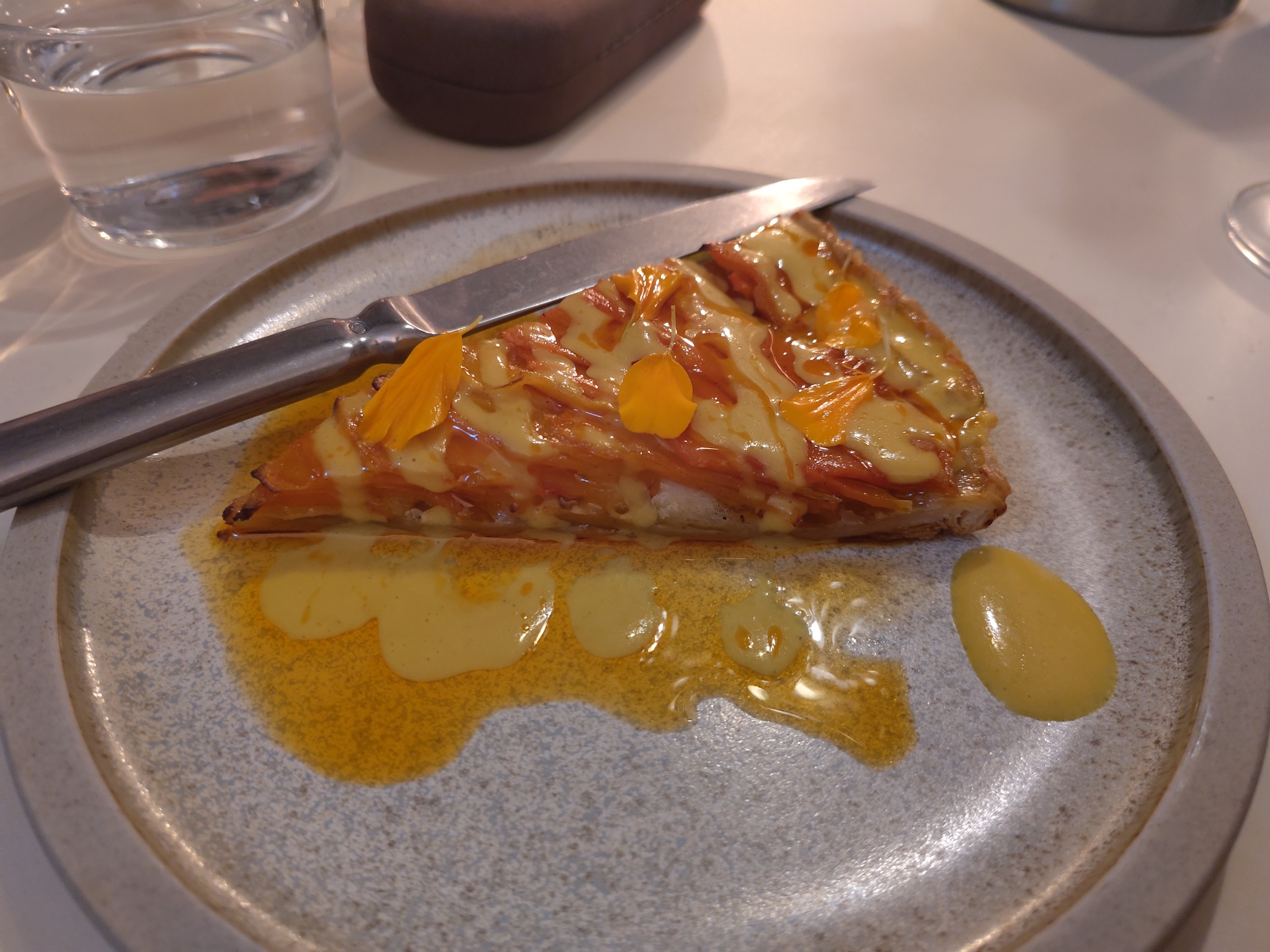
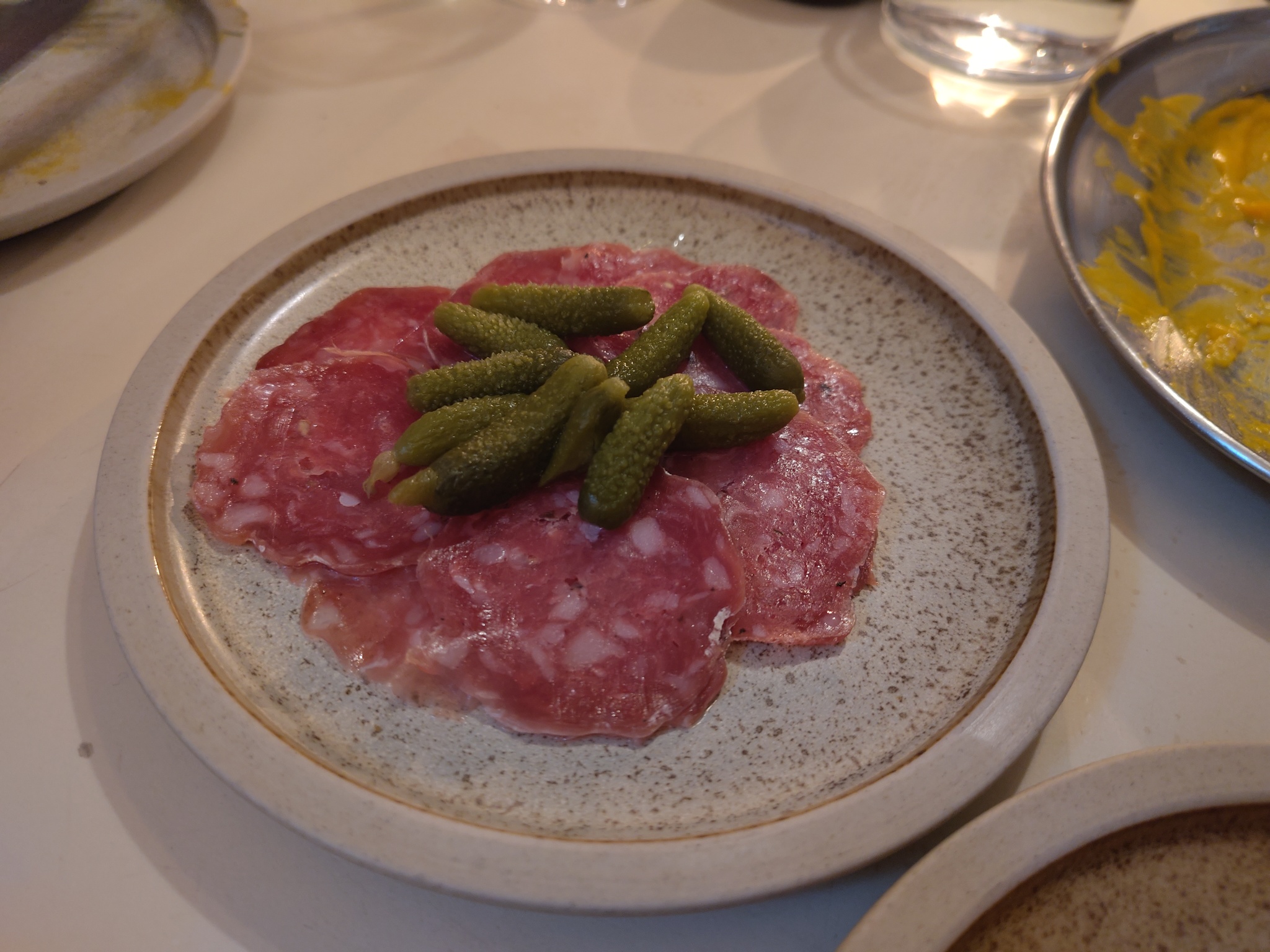
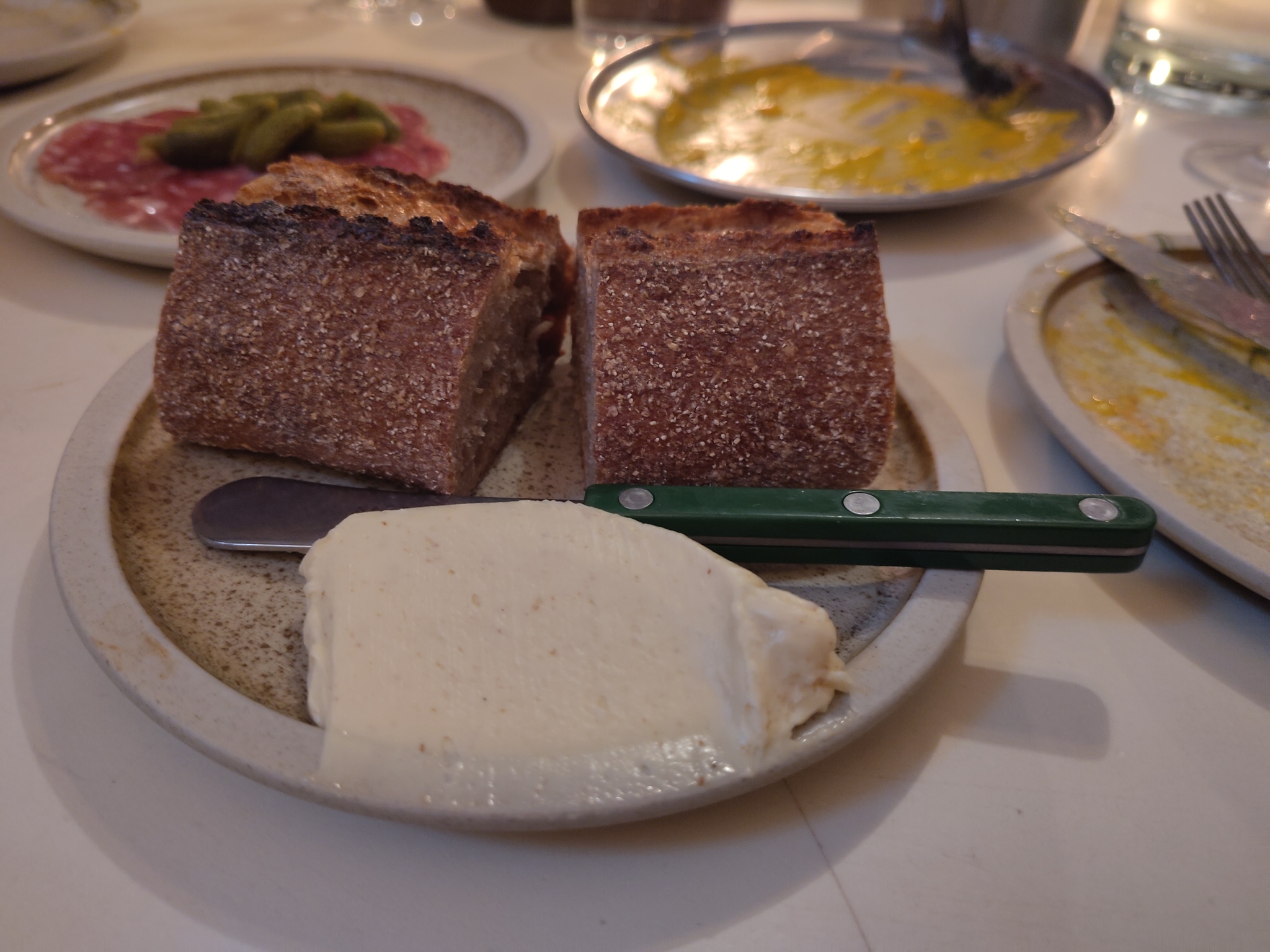
To start we ordered some bread, and brown butter, and a saucisson with some cournichons, and a slice of the squash tart. The tart looked almost like a slice of pizza, but had nice sweet squash flavoured layers interspersed with cream and cheese, on a slightly crunchy base.
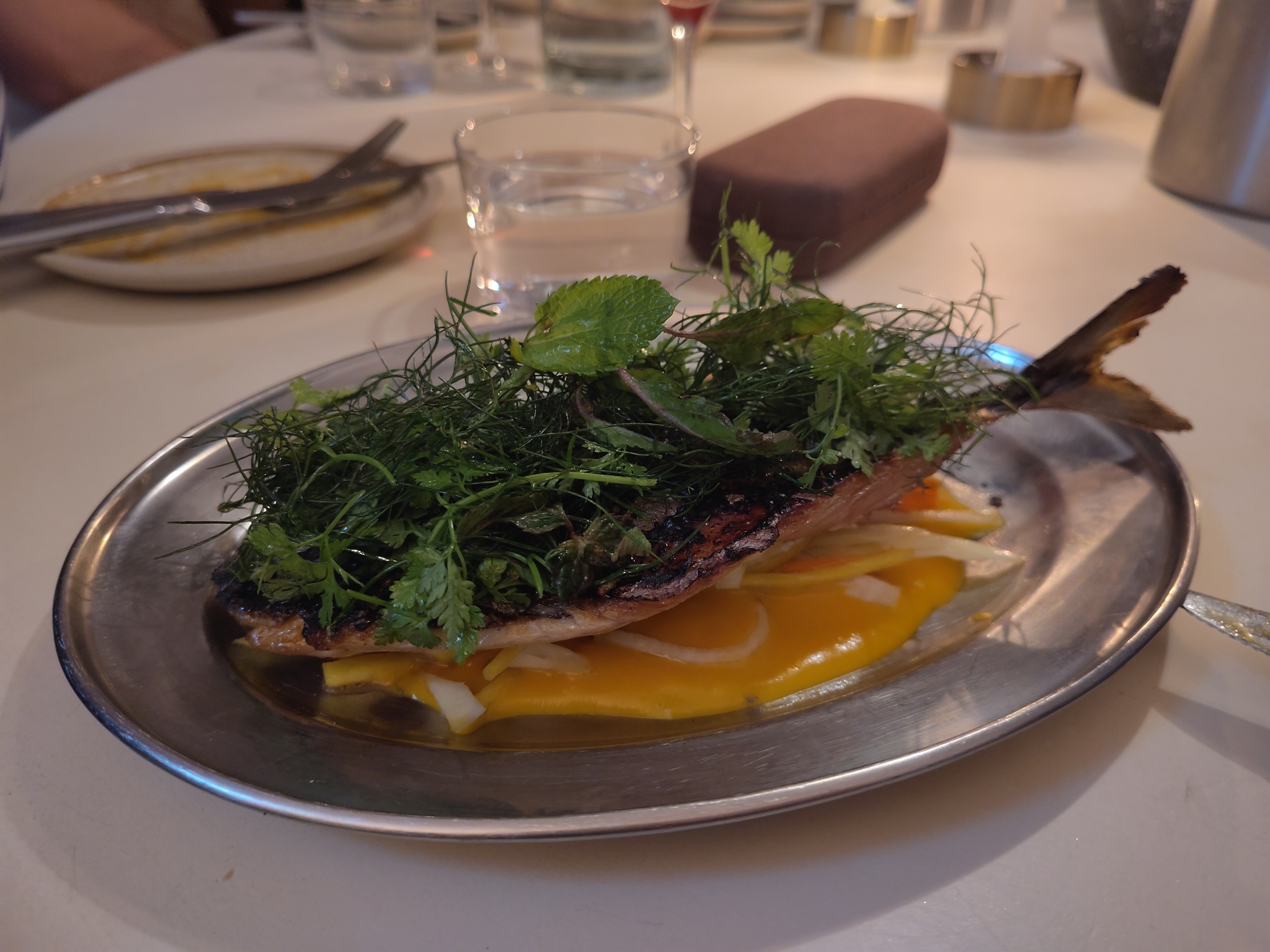
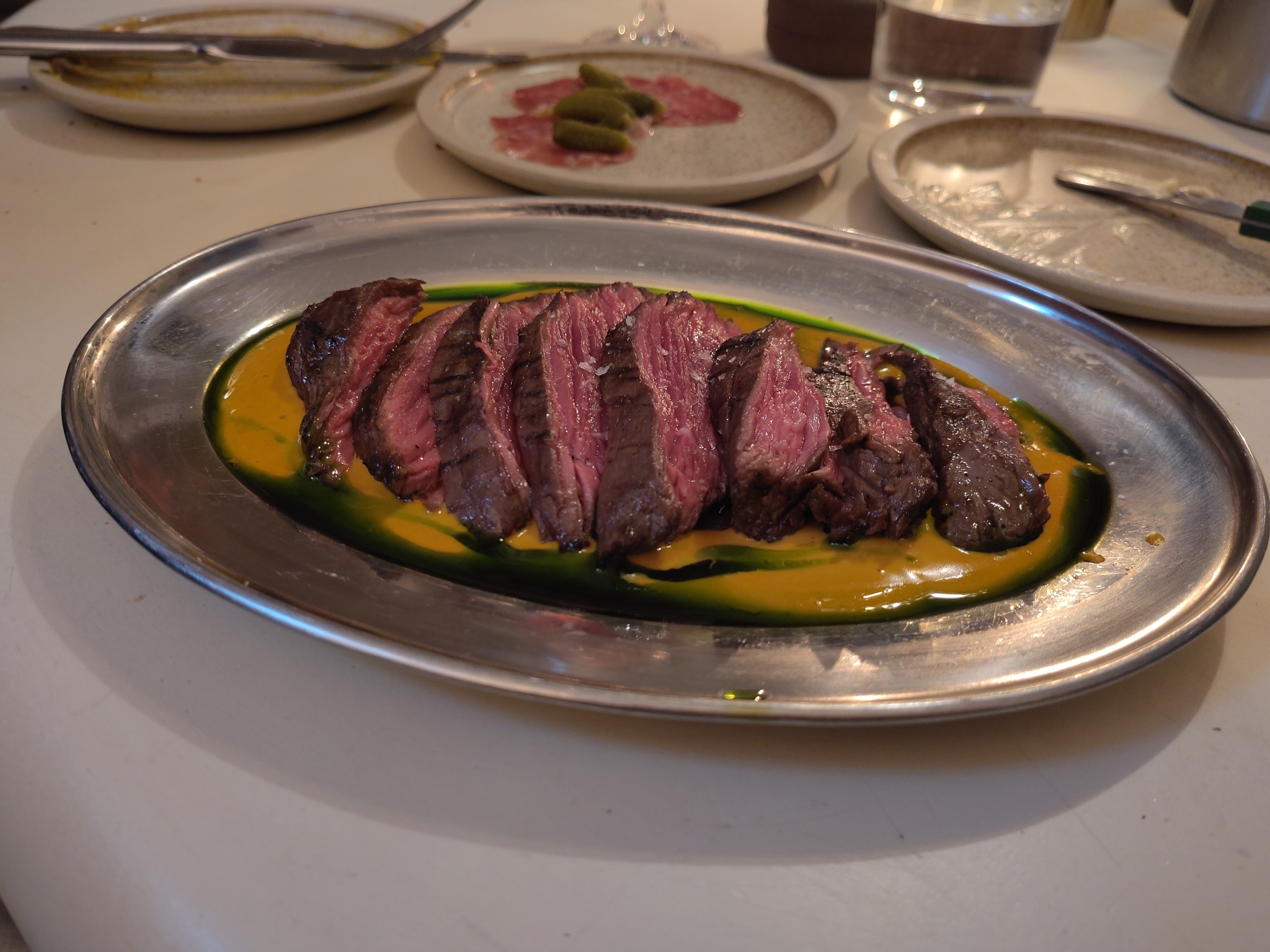
For my main, I picked the Mackerel, with pumpkin, pickles, and herbs. The combination was a little on the sour side for me, but the fish was well cooked and prepared. My wife chose the Bavette steak which was served with an egg york emulsion — a similar idea to the egg yolk that often sits atop a steak tartare. It was well seasoned, but slightly under for the medium that she'd ordered.
Curiously, we did have to ask for the bread and saucisson a few times, and these only arrived after our mains were served. This was disappointing, but overall the meal, and the ambience were both lovely. There was definitely more legroom than at the Barbary.
Later Summer Birding in North Norfolk
Some of you might have picked up that I have started to show more interest in birds. Either on the side panel of this blog, on Mastodon, or in Real Life™.
One time I was visiting RSPB Rainham Marshes, I spoke with a chap who recommended I should go visit the reserves in North Norfolk. I was aware of the richness of habits there from the BBC's Springwatch and Autumnwatch programs, including the conflagration of large flocks of birds there in the autumn migration season, especially at spring high tide.
I had done a little research, but found it hard to decide on where I should go, until I discovered that I could do an organised tour of the area. So I ended up on a train to King's Lynn in mid-September to join a tour with Wildlife Worldwide.
Day 1: Settling In and Our First Outings
No story about going anywhere in the UK is complete without some public travel trouble. First the useful tube line was suspended, and secondly the train into King's Lynn was delayed due to speed restrictions.
At the station, me, and two others of the group were met by our tour guide, Harry, and transferred to the Knights Hill hotel, where we would be staying for the whole trip.
As we were a little too early for check-in, the three of us had a light lunch at the associated pub. After check-in, we met the other four of our group, and had a briefing to find out what the general plan was for the next few days. What species did we want to see? I was keen on seeing a Bittern, Richard a Green Woodpecker, and Mary a Hare.
The good news: Lots of places to visit, with different habitats and species. The bad news: Some days we had to get up at 5:30am.
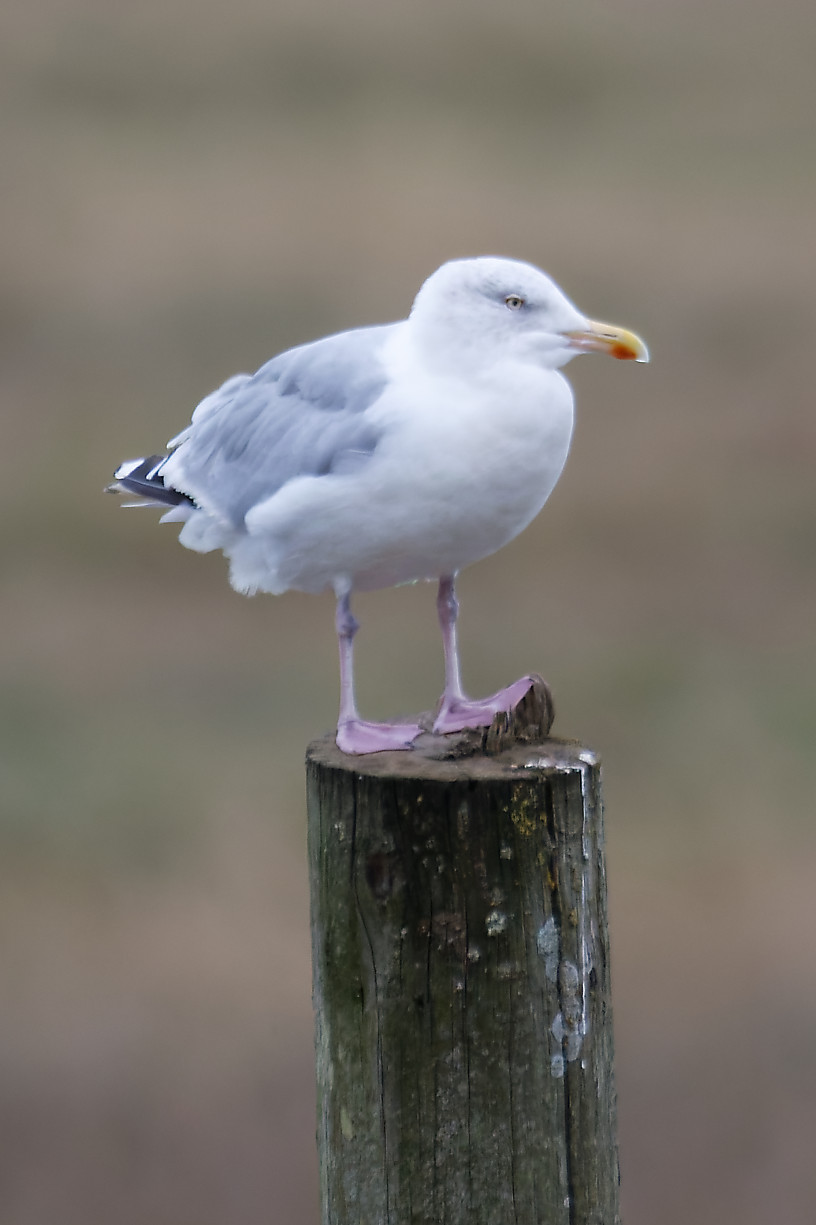
After the briefing, we headed out to our first spot, Holme Dunes. This was our first look at the coast, where we saw Cormorants and a flock of Red Knots — way out on the sea. The shoreline had a few Herring Gulls and Oystercatchers wading about. A little further out on the broad walk, I was quite excited to see a raptor, which upon closer identification turned out to be a gull. After making it back to the car park just before closing time, we spotted two Buzzards flying, and a Sparrowhawk perched on a post.
Our next stop, Thornham Harbour, is a little further east along the coast. On the shore here were many gulls, and a few Spoonbills with their heads tucked in. In the distance, a Marsh Harrier was perched near the beach, a Kestrel hovered overhead, and a small flock of Greylag Geese was doing wherever geese do. The typical "Herring Gull on a post" rounded up the evening.
Back in the hotel we had dinner, and went through a list of all the birds we saw that day: listing them.
Day 2: Around Cley Marshes and Kelling Heath
The big outing on the second day would be NWT Cley Marshes, a breeding bird sanctuary. But it wouldn't be the first stop of the day, as we were too early.
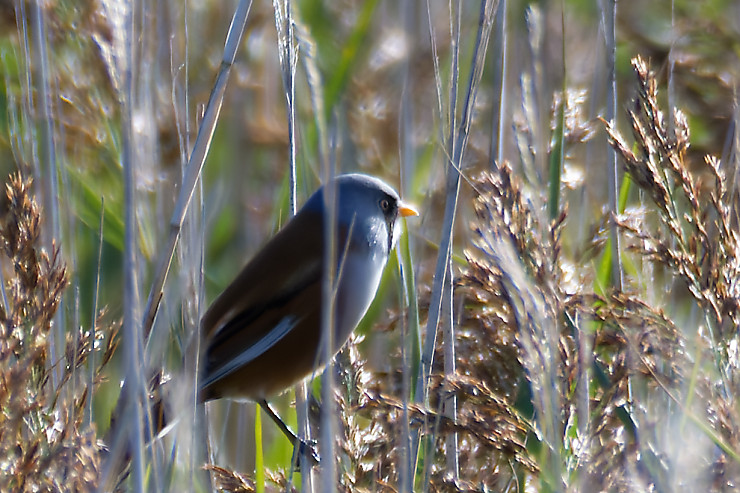
Instead, we had a wander around just west of the town, near Cley's windmill. On the walk towards the sea, we had a glimpse of a Bearded Tit. A bird that I had heard a few times, but had never seen. It was hiding in the reeds, but it did show long enough for a distant photo.
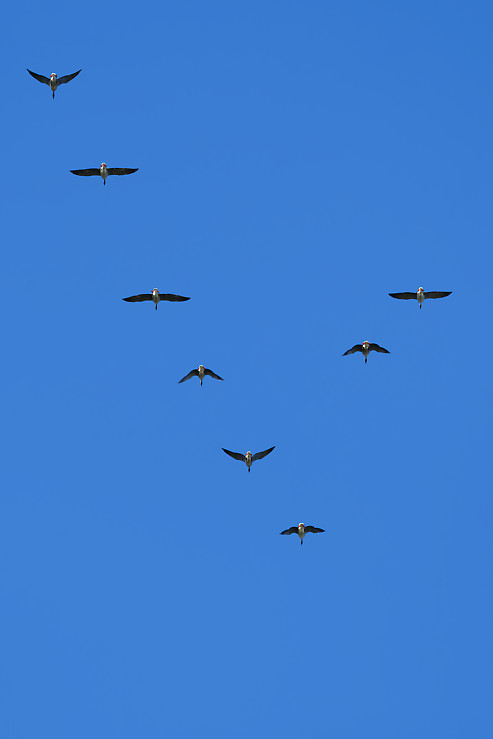
A little further out, I thought I had spotted a goose. But when Mike had a look with his binoculars, it turned out there were two birds there. And neither of them was a goose. Instead, we had found two Curlews, the first of our trip, and the first one I had ever seen. A flock of Pink-footed Goose came flying over once we neared our car. One of the first to come through the area on their yearly migration south.
After a few minutes travel, we arrived at Cley Marshes. We got our Norfolk Wildlife Trust membership packs, and headed out to the first set of hides. A flock of Spoonbills promptly flew over, followed by a flock of Golden Plovers.
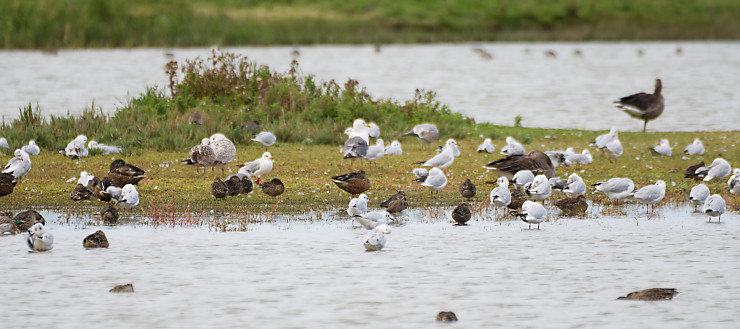
From the hides we could see many birds on the islands of Pat's Pool, mostly Greylag Geese and Spoonbills, but also different types of Gulls.
In the shallow water, Pied Avocet and Ruff were foraging for grubs, and a Sandwich Tern flew overhead trying to figure out whether to try to catch a fish. But most of the birds were quite far away to make them out clearly.
After enjoying the view, we moved on from the central hides to Bishop's Hide, which looks at the lake from the other side, and a slightly closer distance. From here we spotted some more species too. Some ducks, a Greater Black-backed Gull, Black-tailed Godwits, and a Lapwing. Flocks of Golden Plovers and Greylag Geese adorned the skies as well.
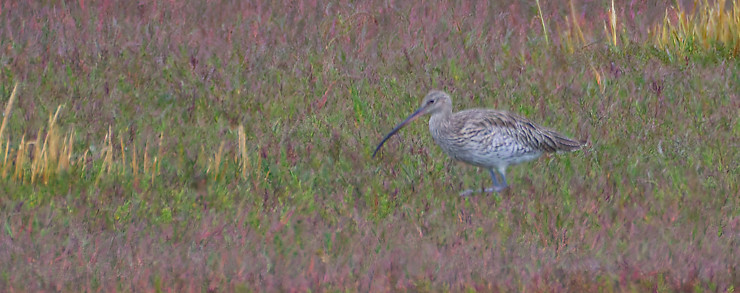
Before we went for lunch, we had a short drive to the East Bank. This raised dyke gave great views over the Marshes. We saw many species again, but binoculars, or a telescope was required to see them well. Some heather still had some nice colour to it, and in it, we saw this Curlew.
At the far end of the walk, on the beach, we spotted more Terns and a Scoter, quite unexpectedly. On photos later, I also found a Bar-tailed Godwit, and a Ring Necked Plover, both new species to me.
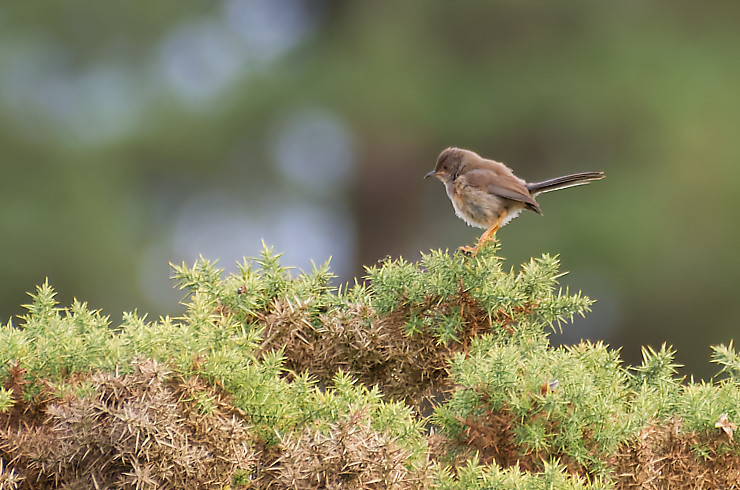
After lunch, we headed to Kelling Heath, with the intention of hopefully seeing some rarer birds. Kelling Heath is one of the few places in Norfolk where Dartford Warblers breed. On the way upwards to the heath, we saw flocks of Linnet, a Robin singing for us, and a few Wood Pigeons. A Muntjac was quietly grazing on the grass.
On the heath itself, we spotted a few Stonechats, and one of them was kind enough to sit still for a while. Collins Bird Guide says about Dartford Warbles: "often reveals itself in the top of a bush", which is exactly were we found this tiny juvenile a few minutes later.
Back at the hotel, we had an interesting discussion about why some bird names get the prefix "Common", and some others "European". I don't think we got to a conclusion though!
Day 3: Titchwell Marsh, Brancaster Staite, and Holkham
We enjoyed a reasonable early breakfast and headed to RSPB Titchwell Marsh, one of the most well-known reserves in the country. As habitats, it covers reed beds, woodlands, fresh- and salt-water marshes, as well as a beach.
We started at the car-park, where we heard a Treecreeper, but could not spot it. Instead, we set of on our walk towards the Island Hide, where we saw our first bird, a Curlew. Harry, our guide had heard that a rare bird — a Spotted Crake — was spotted in the reed beds in the last few days, and expected that it was going to get busy later in the morning with people wanting to see it. The hide was indeed busy, but most of us could find a spot to sit or stand.
During the next hour and a half we looked at several types of waders, coming close by the hide. Much closer than at Cley Marshes.
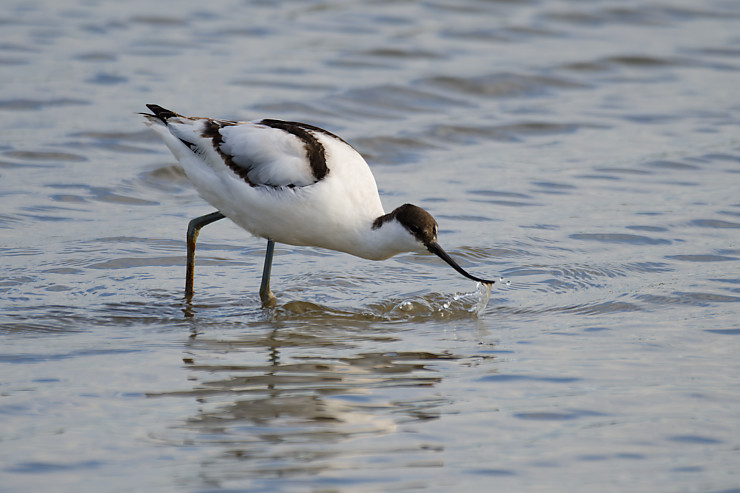
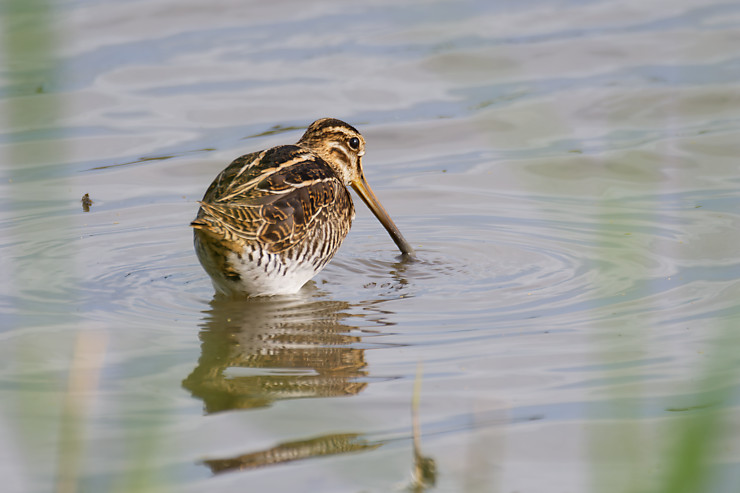
After much searching, and waiting, we did finally see the rare Spotted Crake through our guide's scope — although I was frustrated that it took me so much longer to find it than many others. Giving directions and hints as to where to see certain animals among reed beds is a skill. I didn't think I had a photo of it, but there was a blurry shot of it on my reel.
To be honest, although it was fun to find such a rarity, I had more fun in observing the many other species that were on the lake and the marsh on the other side of the hide. We had particularly good views of Black-tailed Godwits, Pied Avocets, and a Common Snipe was foraging right in from of us. On the island in the marsh there were flocks of Spoonbills and Greylag Geese coming in for a landing.
A while later, we moved onto visiting the next hide, the Parrinder Hide. The area upon which this hide looks out over is fairly different, with quite a lot of mud. This attracts other kinds of species. There were a lot of them quite far away, which makes them hard to see, especially because it was against the Sun. Closer by, we did watch Green Sandpipers and Ruffs probing the mud for grubs again.
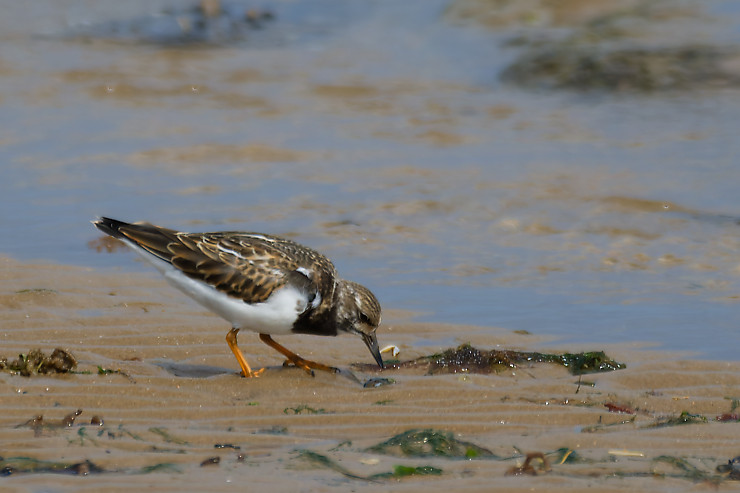
Away from the hides, the atmosphere on the beach was very different. It wasn't busy at all, but it was very windy. When we arrived, there was a large flock of Spoonbills flying over — perhaps the same one we saw earlier.
On the ground, there were several species, such as Herring Gulls, Black-headed Gulls, and Oystercatchers. My favourite behaviour was that of the Ruddy Turnstone, turning over stones on the beach to find food.
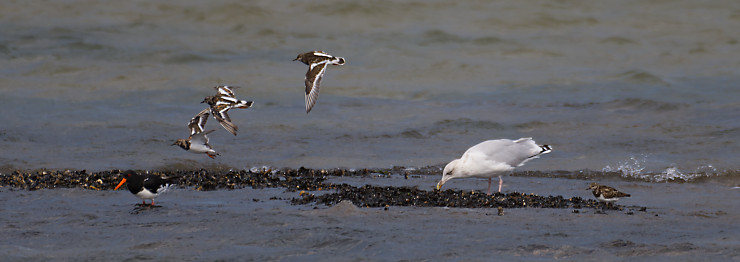
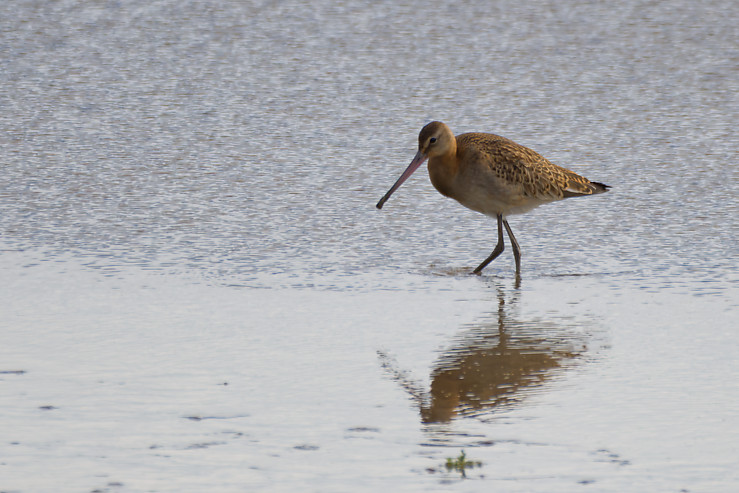
We did briefly go back to the Parrinder hide as we had got word that there were some other rarer species, such as Little Stints. They might have been there in the distance, but I found it very hard to see anything at all, with the sun glaring on the water. Perhaps I should invest in a spotting scope at some point. However, I did get a nice photo of a Black-tailed Godwit strutting about, after it was chased off by another bird.
On the way back to the car park, I found the row of twitchers, hoping to spot the rare Spotted Crake amusing. Some of them had travelled from quite far away. Don't get me wrong, I like watching birds, but I am more interested in their behaviour than "listing". Learning their behaviour, so I can take better photos is much more satisfying than that.
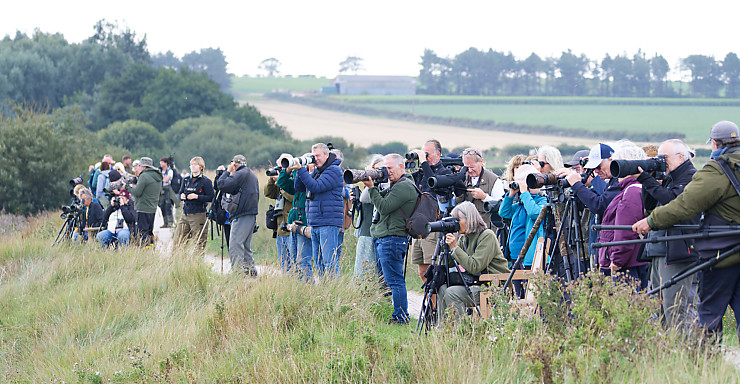
I could easily have spent another day at this wonderful reserve — we skipped quite a few sections and hides — but there were other places to visit as well.
After lunch, we headed to Brancaster Staite and its little harbour. The harbour is mostly a muddy flat, which turned out to be excellent for observing waders. As soon as we got there, a Curlew was perched right upon a bank of sand, next to a Herring Gull chick begging food. A Common Redshank was foraging for food.
Out of sheer luck, we spotted a Kingfisher in the reeds too!
But my favourite time here was a little further away on the mud flat to see the Redshanks and Godwits foraging, amongst small Ringed Plovers and Ruffs. I hadn't really realised how small plovers actually are.
I think my best photo of the day was this Red Shank, literally walking up to us.
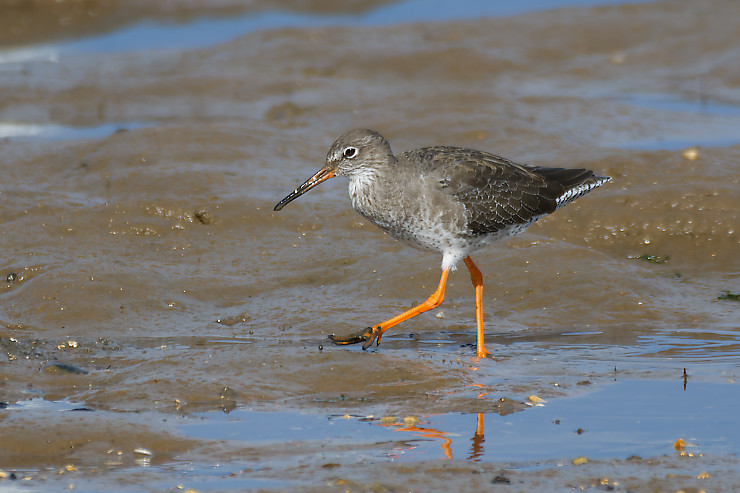
Before we headed back to the hotel, we had one more location to visit, Holkham. We first drove into the park, as Green Woodpeckers are often seen there, but we had no luck, and had to do with hundreds of deer, and dozens of Mistle Thrushes, instead.
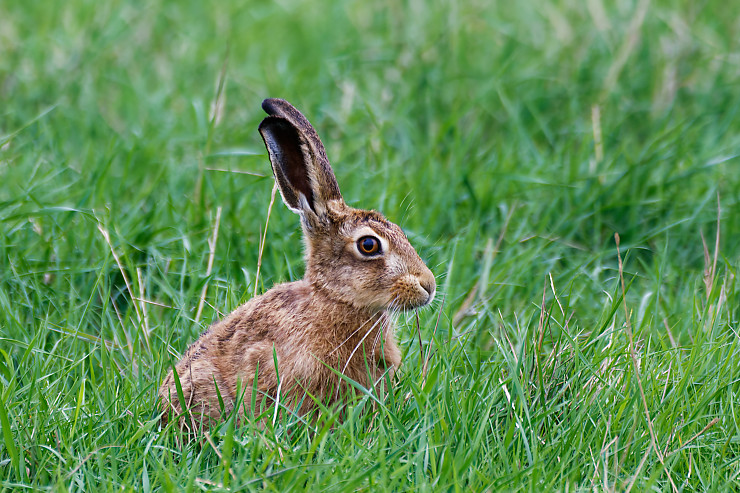
After our flying visit in the park, we headed up Lady Anne's Drive with the intention to park up at the end, and have a look around the marshes on either side for raptors, and other species.
However, when doing so, we spotted this hare munching around. It had very much seen us, but didn't seem to be bothered. This made Mary very happy. After about fifteen minutes we left it on its own, and walked to the coast with its mudflats. We didn't see any new species there, or really nothing much at all.
When we were done, we headed to the hotel for our evening dinner, and the daily listing. We had an early night, as the next two days we had to get up really early™.
Day 4: RSPB Snettisham and Local Places
I woke up at 5am, to be ready for 6am, so that we could be at RSPB Snettisham by 6:30am. I am not a morning person, so you might be wondering: Why‽
Arguably, the whole reason that I went on this trip is to experience the Snettisham Spectacular. A few times a year, during spring tide in autumn and winter, tens of thousands of Red Knots, Oystercatchers, Dunlins, and Black-tailed Godwits, which are feeding on The Wash, are being pushed of these mudflats. The high tide forces them off The Wash, and many of them are pushed into a lagoon at the reserve to wait out the high tide, before they leave and forage again on the great expanse.
So this is why I was finishing my bacon butty at 5:55am, and wolfing down my cup of tea — getting ready to head in the dark to the reserve. On these days, you must book a parking space, which our touring organisation had already done.
When we got to the reserve around 6:30am, it was still dark, and raining. The weather was definitely not great for the 30-minute walk to where we needed to be. When walking south we could already see large flocks of birds in the sky, and before we could get to the final viewing point. We were a little late it seemed, with the migration into the lagoon already in progress. Sometimes, the expectation on when high tide is, is a little off it seems. Luckily, by that time, it also stopped raining, setting the scene for the Spectacular.
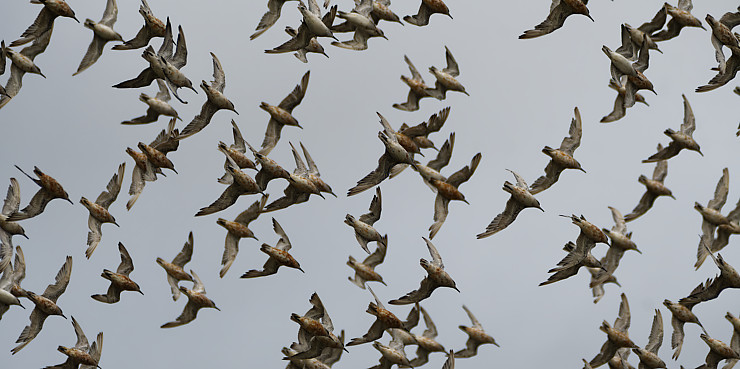
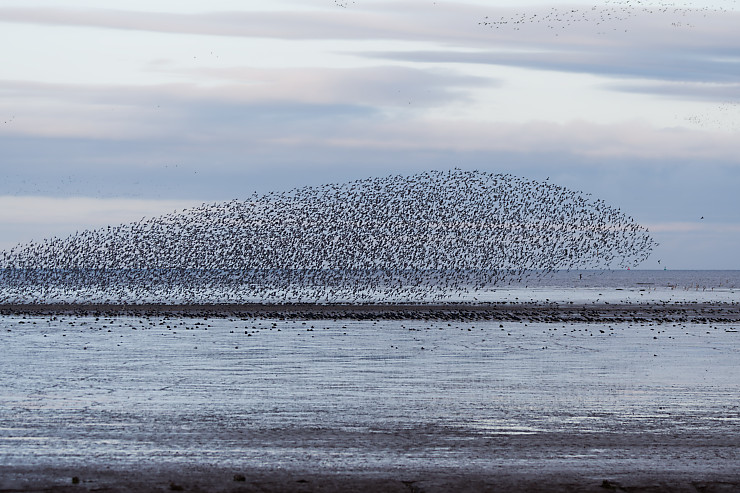
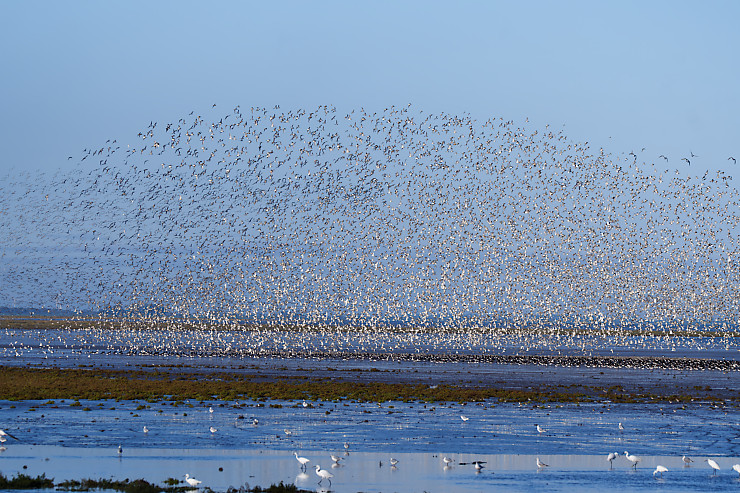
It is really hard to describe the twists and turns that large groups of birds make, so instead of me trying to describe it with words, here are some images:
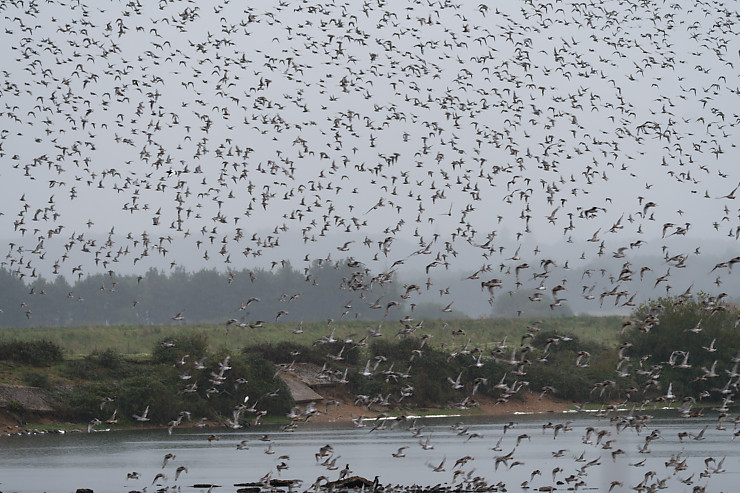
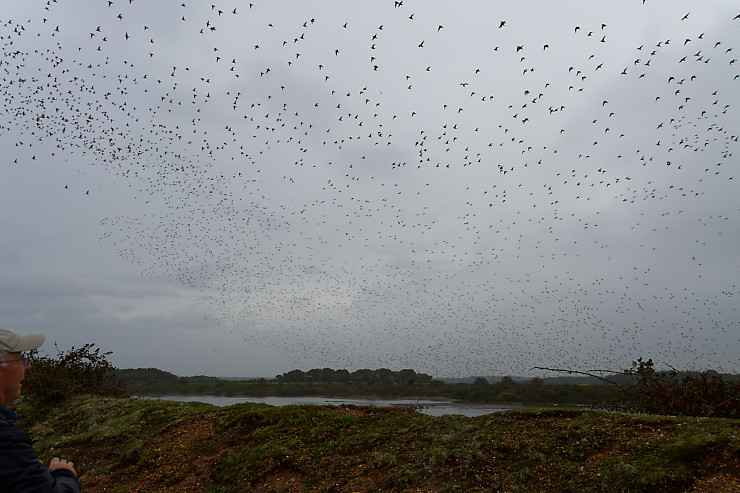
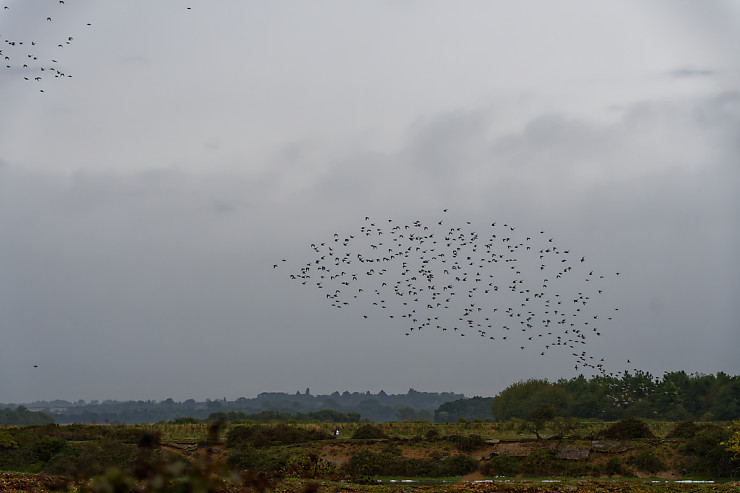
Once the birds come off The Wash, they settle in the lagoon. They arrive in a maelstrom of movement, before settling down after ten minutes. There are so many of them, making it hard to see where one bird starts and another ends.
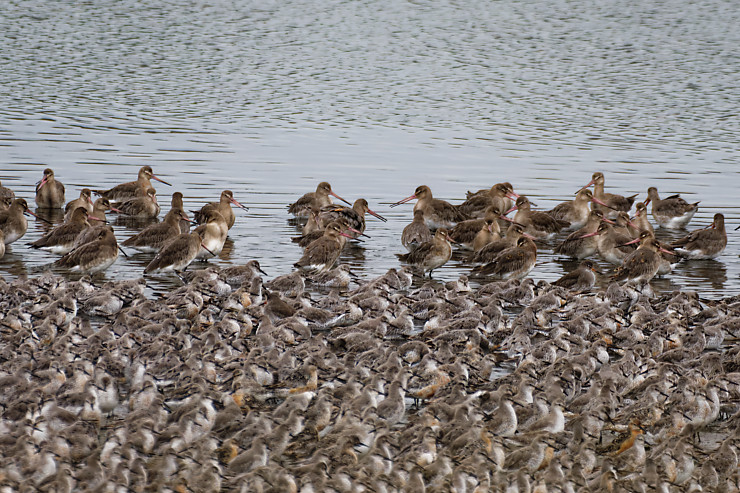
There are also multiple species involved. Here we have mostly Red Knots in the foreground, and a bunch of Black-tailed Godwits on the back of the little island.
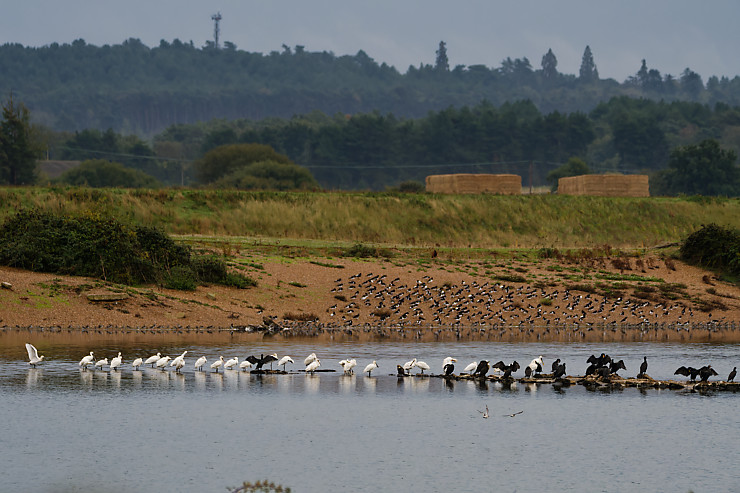
Beyond the Knots and Godwits, there is also a large colony of Spoonbills and Cormorants in the lagoon. Here, you can see them all lined up, with a flock of Oystercatchers on the distant bank.
After admiring the large flocks coming over, I walked around the lagoon to one of the hides. It was busy in there, but you got a great view of the thousands of Oystercatchers that also made it here.
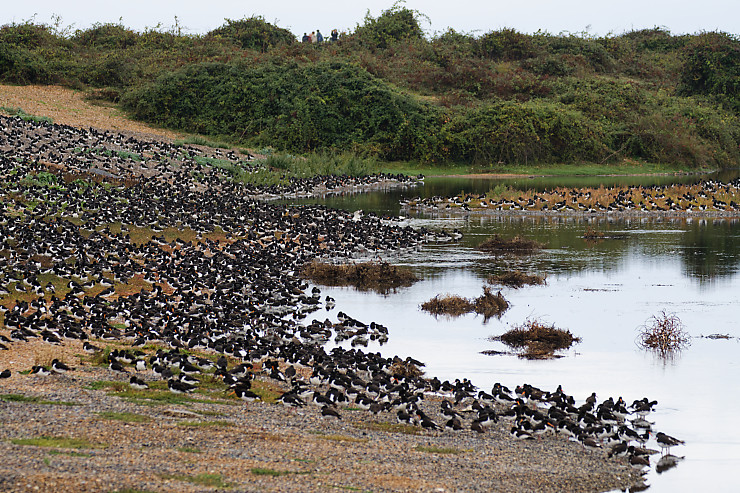
After a while, when the high tide is receding, the birds move away from the lagoon and back into The Wash, reversing the spectacular displays from earlier in the morning. As we were now in the right place at the right time, the experience was even better, with the birds flying straight overhead, metres away, and in their thousands.
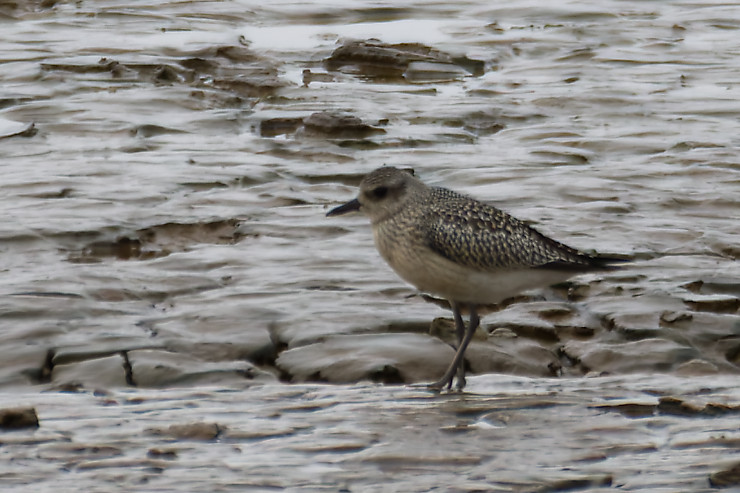
After we finished admiring the spectacular, we walked back slowly towards the car park, but not before having a good look to see what else we could see in the woodlands, and marshes. We found (our first) Turtle Doves, and a Black-bellied Plover on the marsh.
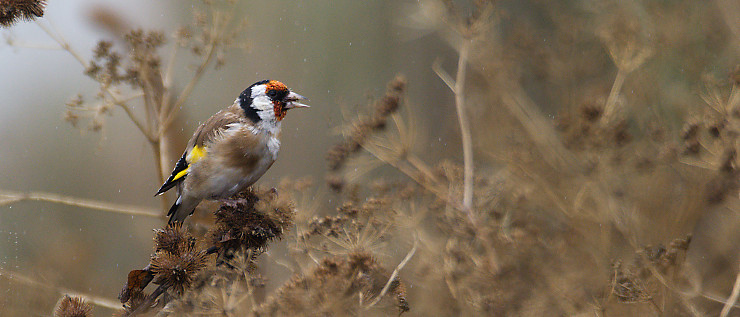
Just before leaving the reserve, we also enjoyed watching this Goldfinch eating the seeds from the plants. I had seen them before, but the light was perfect to capture this encounter.
We went for a light lunch at Norfolk Lavender's Café and after that we retreated to the hotel to rest for a while. I didn't quite find that necessary, and instead went to the pub to have a first pass through my thousands of photos.
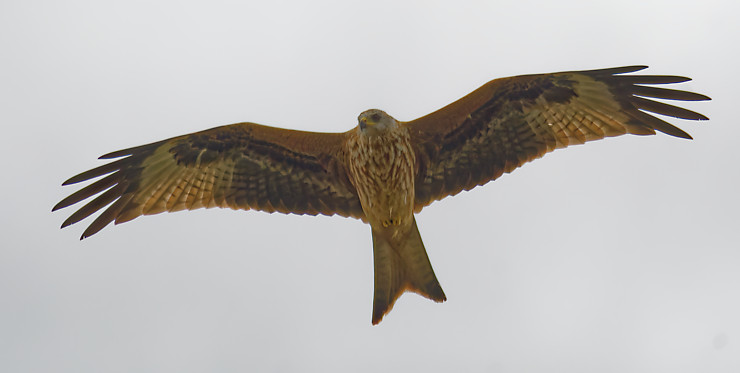
When everybody was well rested, we headed back out. The first location was the Choseley Drying Barns, where we saw Red Legged Partridges, Pheasants, and a few Red Kites soaring over.
We continued to the Holme Dunes. There were some reports that Barn Owls had been spotted just after sunset. We only stayed briefly, but didn't see any in the short time we were there — it was also not after sunset.
Richard mentioned that a few years ago, he and Sheila had been to West Newton church , where they had seen a Little Owl. But as it was now later in the day, he and a few others wanted to get ready for dinner. After they were dropped off, a few of us headed back out not wanting to laze about for an hour, and made the trip to West Newton's church.
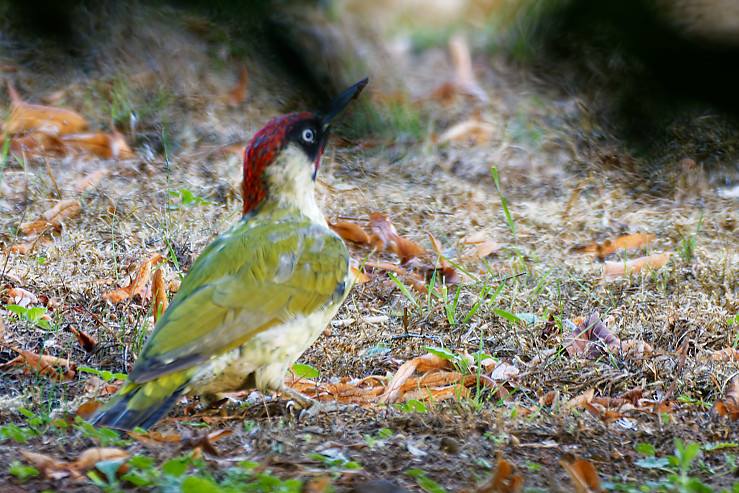
We did not see an owl, but we did see this lovely Green Woodpecker under a tree — sorry Richard. We also had a chat with one of the church wardens, who said that the owls had been displaced by Jackdaws this year, but these had now left. She showed some lovely photos of two Little Owl chicks on a gravestone — taken by a certain Les.
Back at the hotel, during dinner, we couldn't wait to show the photo of the Green Woodpecker as part of listing all the species we had seen that day.
Day 5: RSPB Snettisham, and Finishing with…
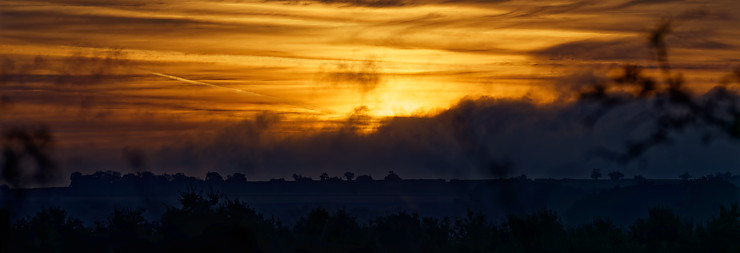
We decided that, because we were a little late yesterday, get up at the same time to be at Snettisham at the same time too. With the tide being high 40 minutes later than the day before, we should have a lot more time to get into position. It was such a different morning — clear skies, and no rain to be seen. The sunrise was amazing.
We were dropped off at the accessible parking location, were we had a chat with one of the RSPB rangers. I had spotted that his name was "Les", and wondered whether he was the Les that took the photos of the Little Owls that the church warden showed. It turned out to be him indeed, and he informed us that the Little Owls ought to be back at the church now. What a coincidence.
When we arrived at the viewing point, there were still many birds out on The Wash. The tide wasn't very high at all, so there was no reason for the birds to make their way into the lagoon yet.
But flocks of birds were in the air, nicely being caught by the low yellow sunlight.
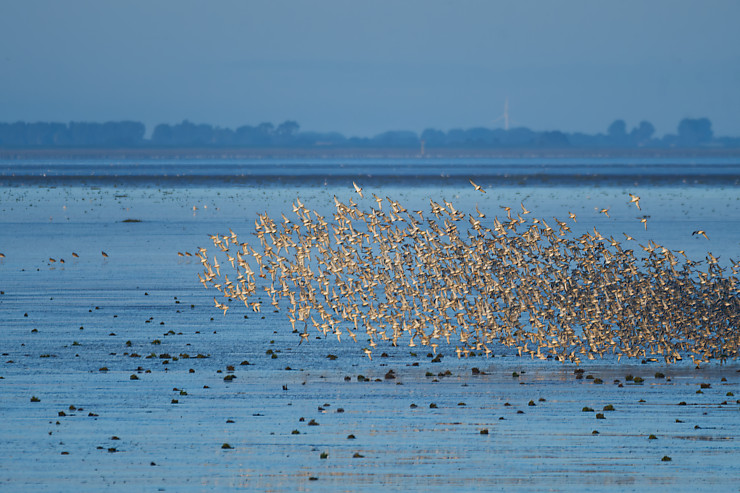
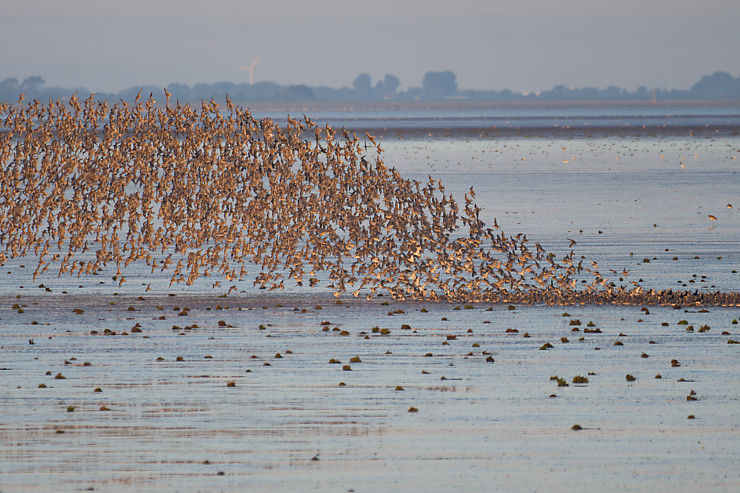
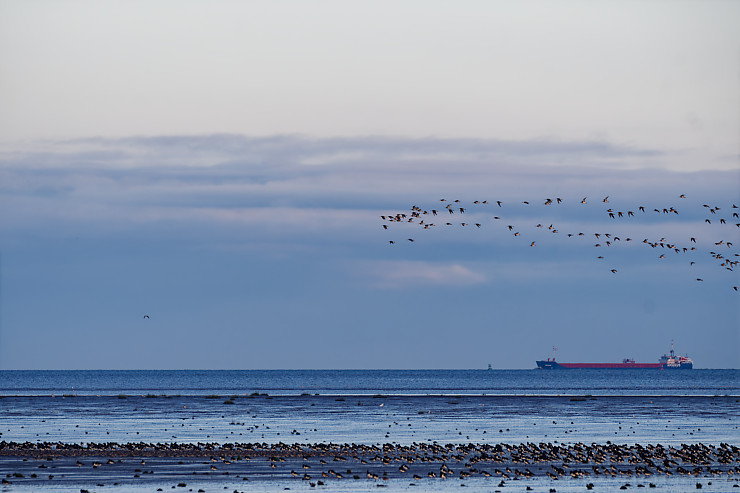
Over the next hour, the tide was coming in pushing the birds further and further towards the coast, but still not quite into the lagoon. The countless murmurations of large amounts of Knots, Godwits, and Oystercatchers were mesmerising.
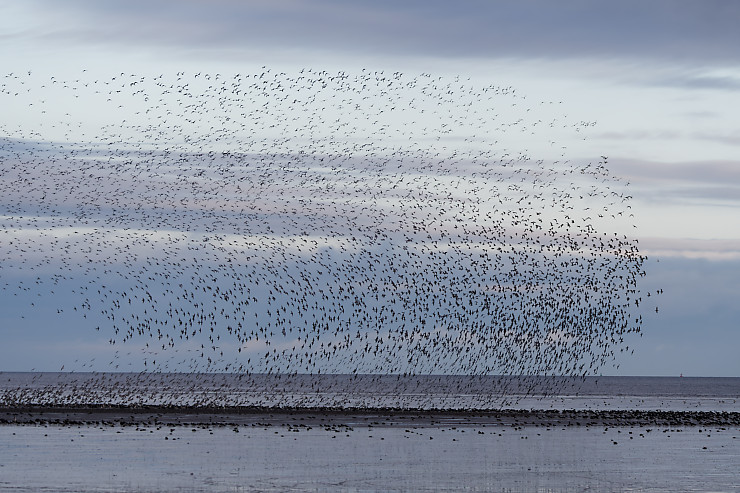
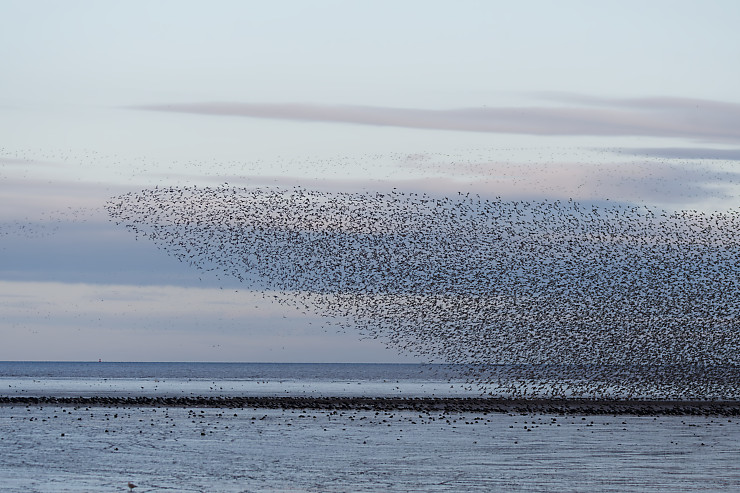
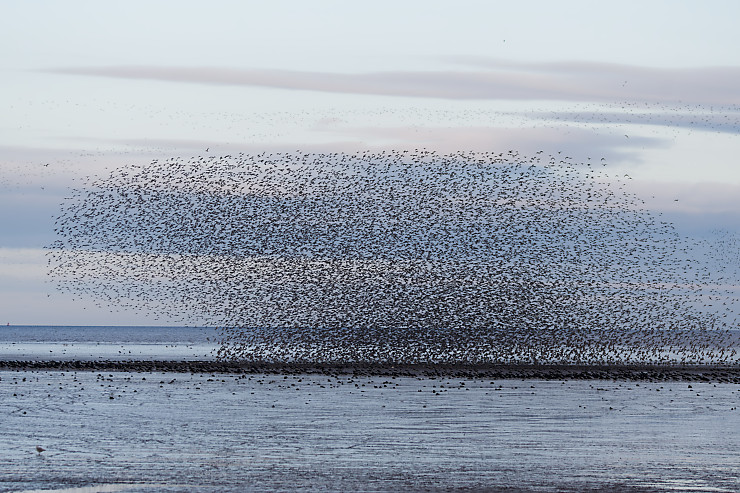
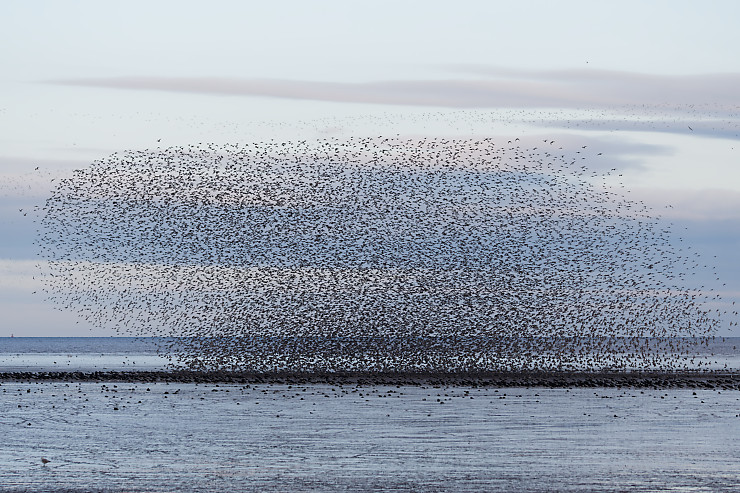
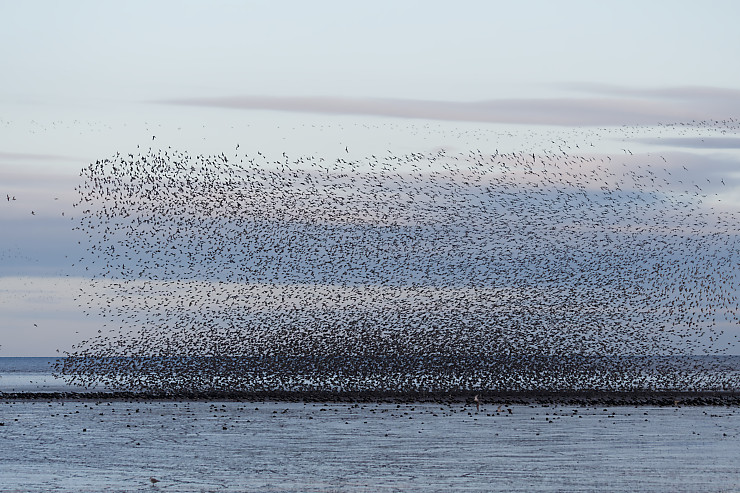
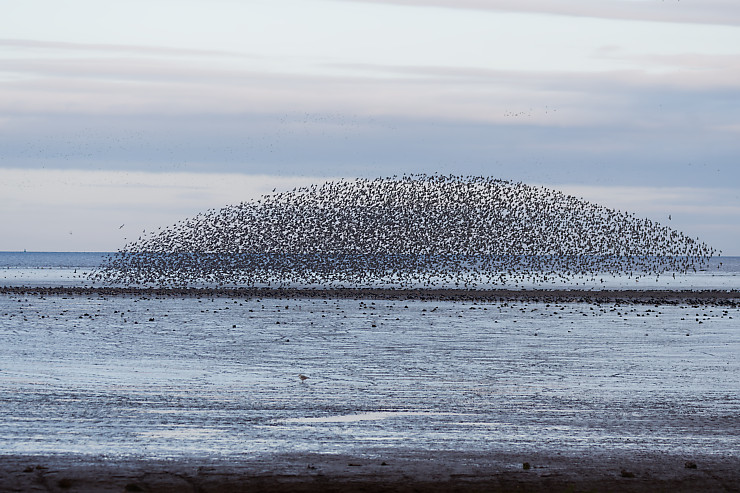
As it was a Monday morning, it was not nearly as busy as the day before, which made for a much nicer experience. There was even some space in the hides at the southern end of the lagoon.
It is hard to describe how many birds there really were. Besides the 50 thousand Red Knots, the 8 thousand Oystercatchers, and the Godwits, there were also flocks of Shell duck, and Golden Plovers.
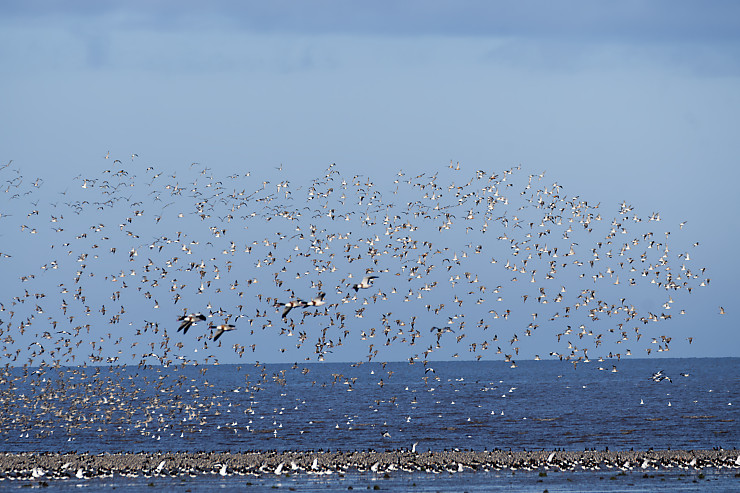
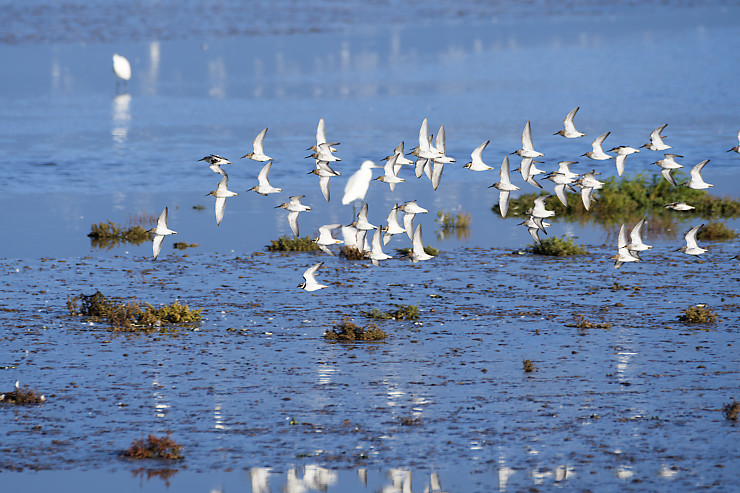
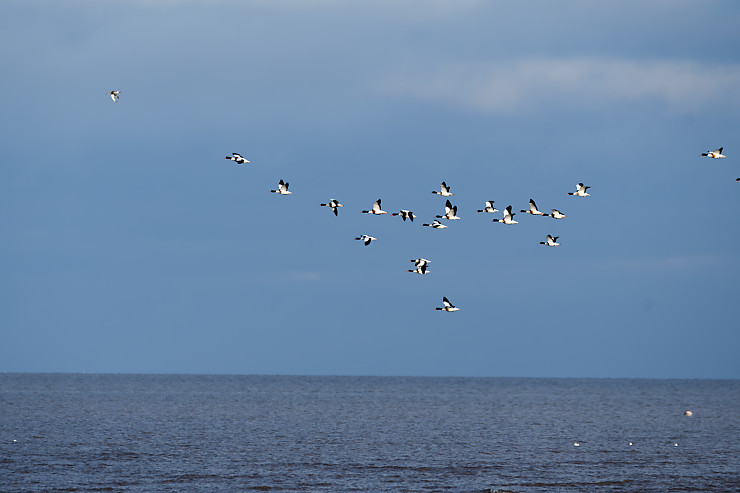
Once the event really got going, with the tide now approaching highest, and the light just being right, the sight was preposterously amazing.
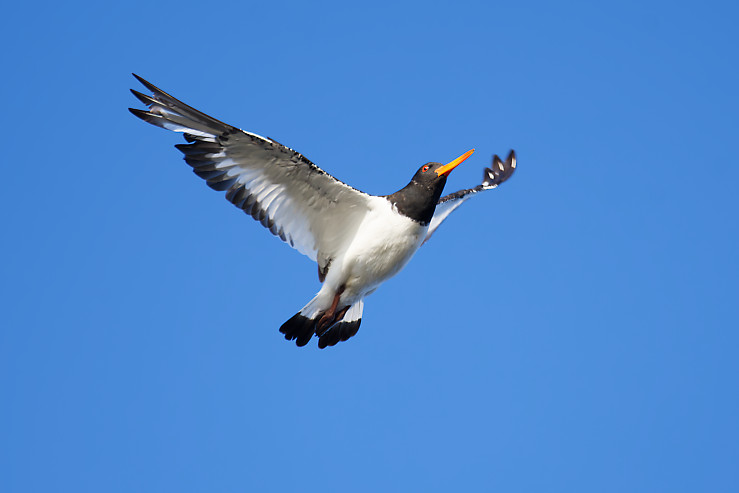
At some point, the Oystercatchers were flying overhead so closely, that it felt like I could almost touch them.
The lagoon became filled with birds again. Mostly the Red Knot, but also many Oystercatchers, interspersed with Little Egrets. As we had a bit more time, it allowed from some more exploration of the lagoon area.
After a few hours, we had seen enough at Snettisham. There were a few hours left to explore until the scheduled tour finishing time, around midday.
First we headed out to Hunstanton Cliffs, in the hope to see some Gannets and Skuas on their migration over the sea. We didn't see any of them, but instead we briefly saw an Arctic Skua/Parasitic Jaeger chasing gulls to see if it could steal some fish they'd caught. It didn't succeed, but it but was again a new, and unexpected, species.
With about half an hour to spare, we returned to West Newton's church. With the additional information and encouragement of Les and the church warden, we were hoping to spot a Little Owl in the tower. To our great surprise, as well as our guide's, the Little Owl was right where it was supposed to be, well-spotted by Harry from our moving van. I still don't understand how he spots and identifies birds so easily. I guess it's a skill to learn over time.
In any case, ending our tour with finding the Little Owl in the church tower was such a great experience.
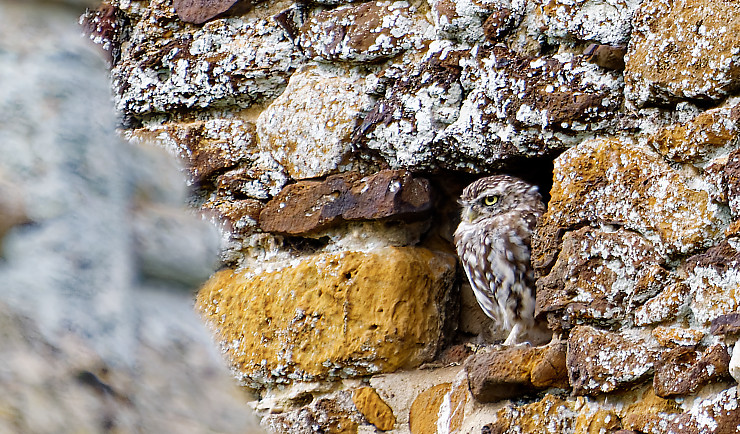
After returning to the hotel, we said our goodbyes. We were all travelling back. I had to wait a bit longer as I booked a later train, giving me the opportunity to go through many more photos before getting on the train home back to London. The two hours that that journey took, was also spend by looking at more of the marvellous photos that I took on this excellent trip.
I will be back to this part of Norfolk next autumn, but likely on my own steam, as there are so many places that warranted longer stays or more exploration. I have learned about good places too, which I will cherish for a while.
Thanks Harry, Mike, Bob, Richard, Marie, Mary, Sheila, and Don, for the great trip!
You can find more photos on in Flickr album "North Norfolk in Late Summer".
Shortlink
This article has a short URL available: https://drck.me/north-norfolk-kdx
Comments
well done, i envy your Bearded Tit, would love to see one of those one day...
tours are a great way to quickly learn little tricks about birding & ID...
@blog Now go to Montfrague (Martin Kersey or David Lindo) or Eastern Poland (Łukas at Wild Poland).
Tony Williams ( https://www.loirevalley-france.co.uk/shops/tony-williams/) in La Brenne is a good guy, but suspect he only guides.
Friday Night Dinner: The Barbary
A hip place in Covent Garden. We were a little early, and while waiting had a good overview of the place: A big kitchen area in the middle, with a coal fire, and around that a horseshoe of bar stools.
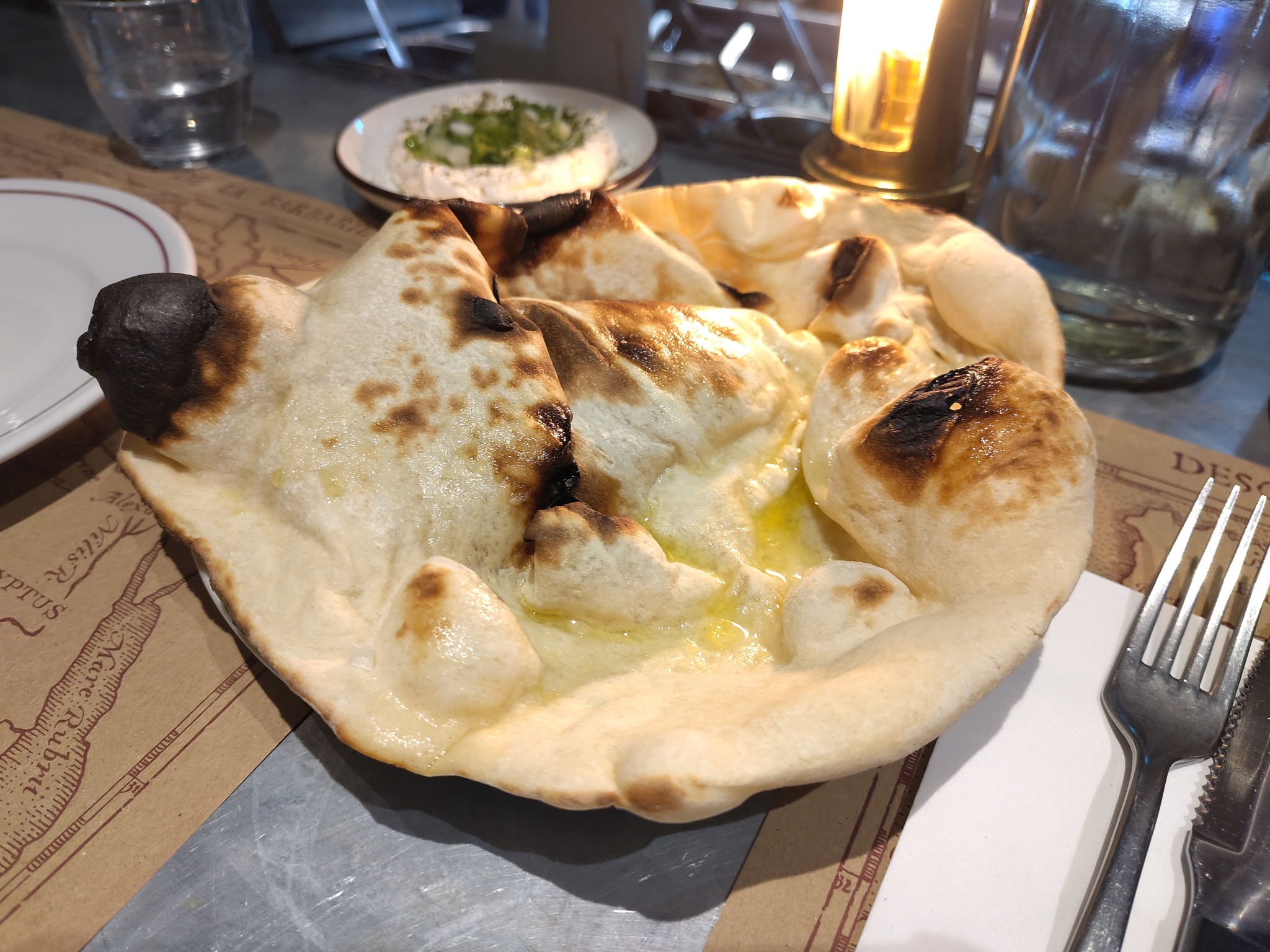
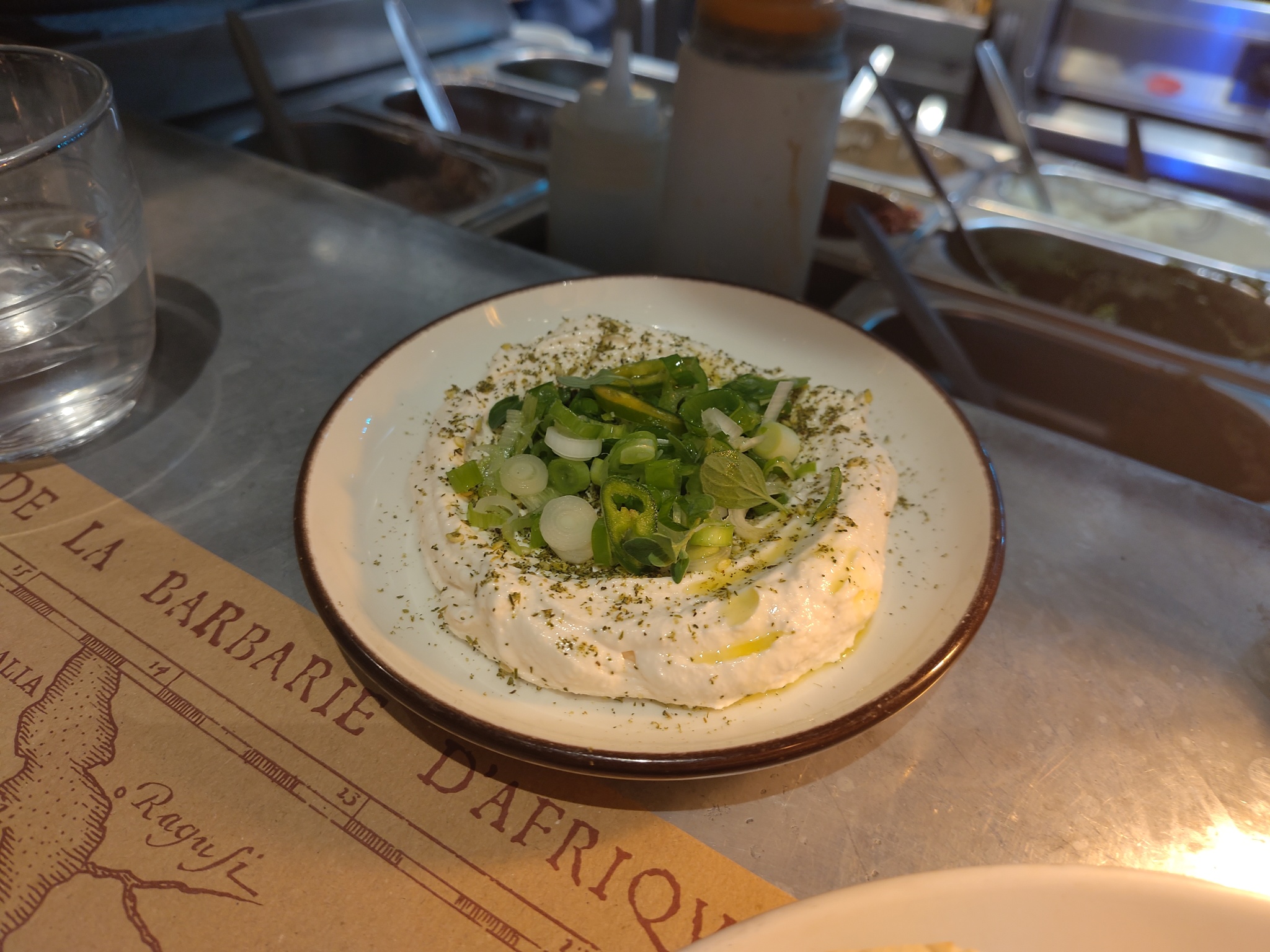
We started our meal with a naan, made right in front of us in a tandoori from a bundle of though. It was fluffy and crispy, and the cod's roe with spring onions was an excellent dip.
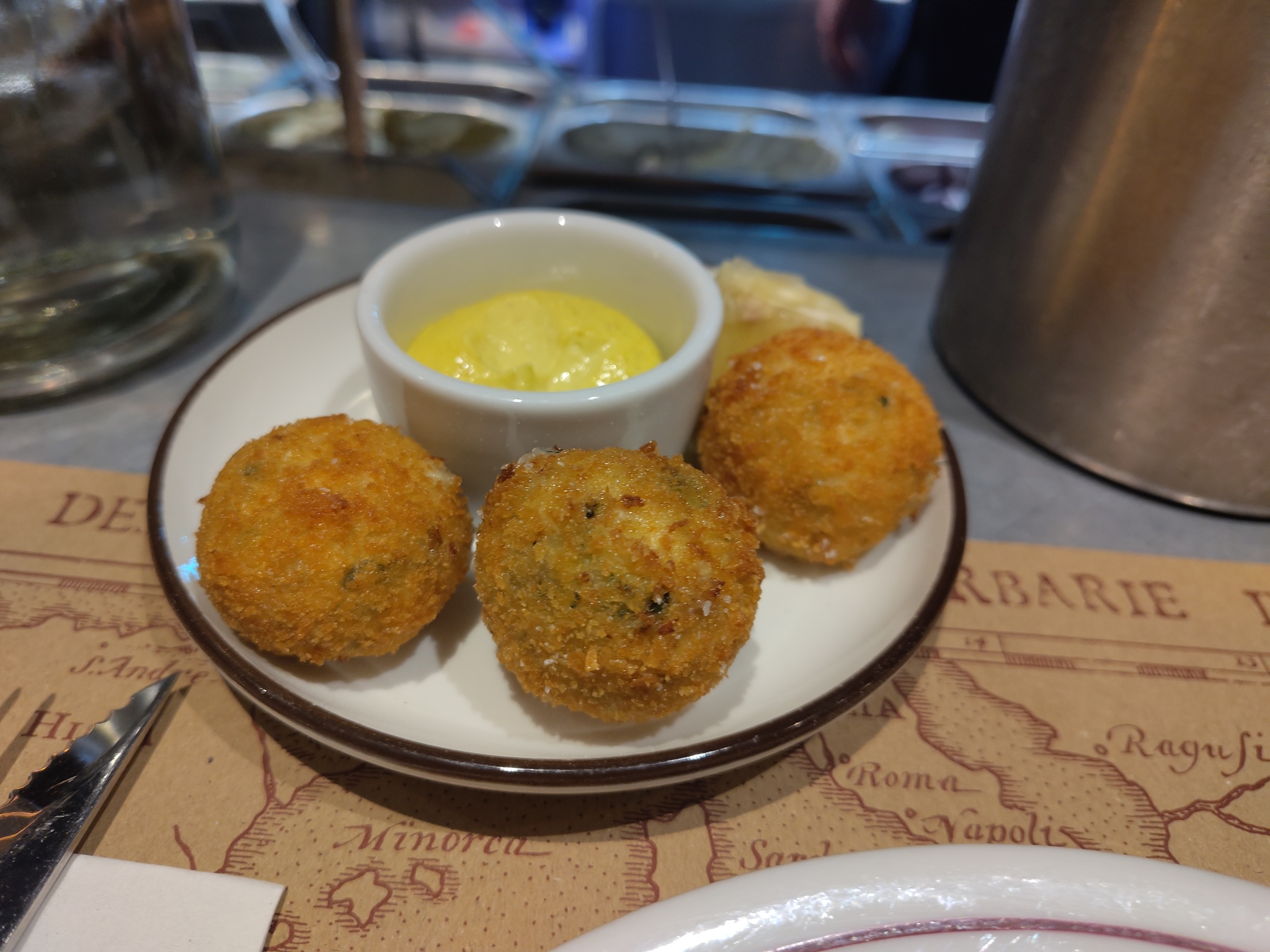
After this followed the starters, a trio of croquettes, with a dip. It's a weird number for a sharing-style restaurant catering for mostly couples.
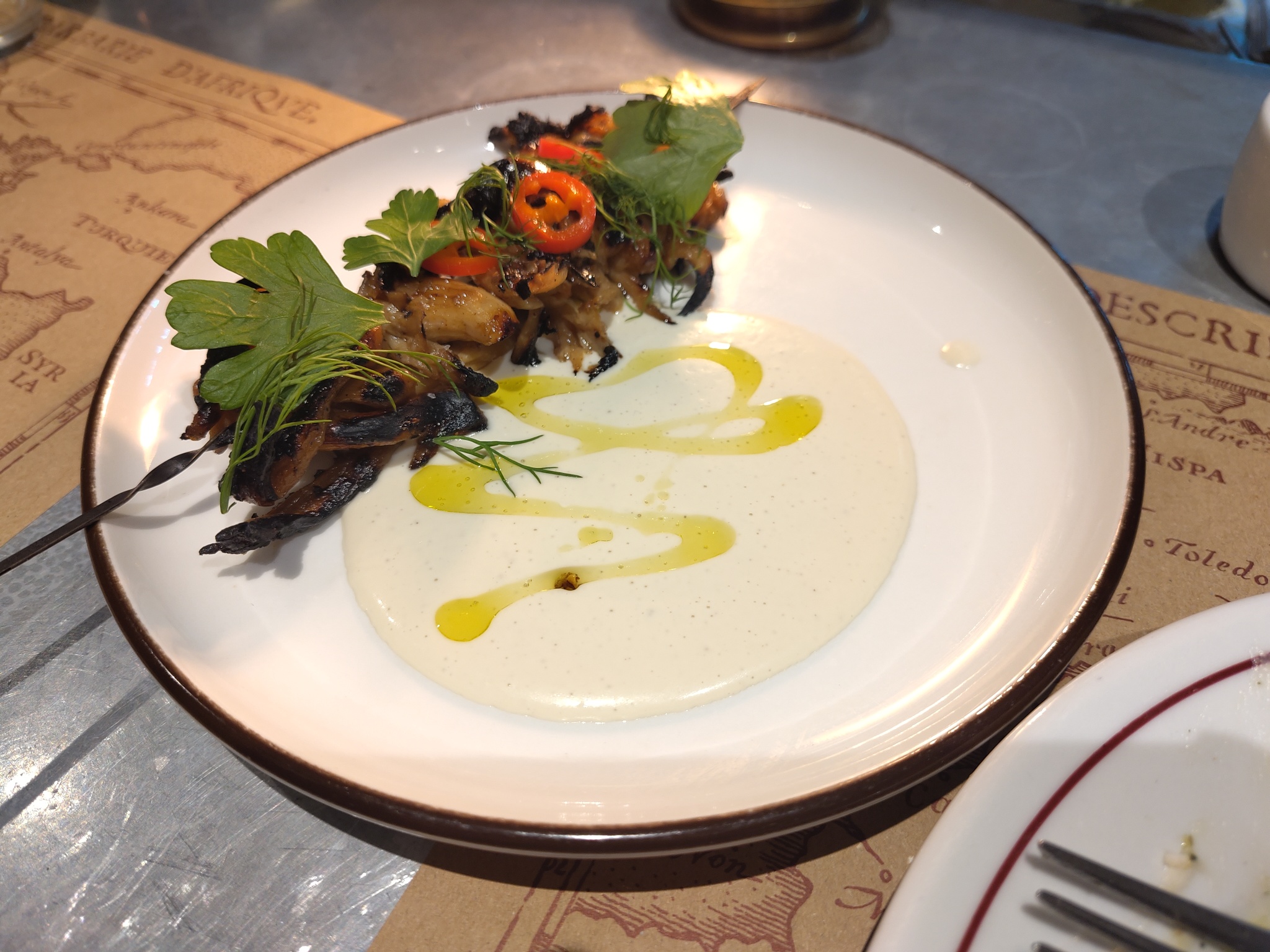
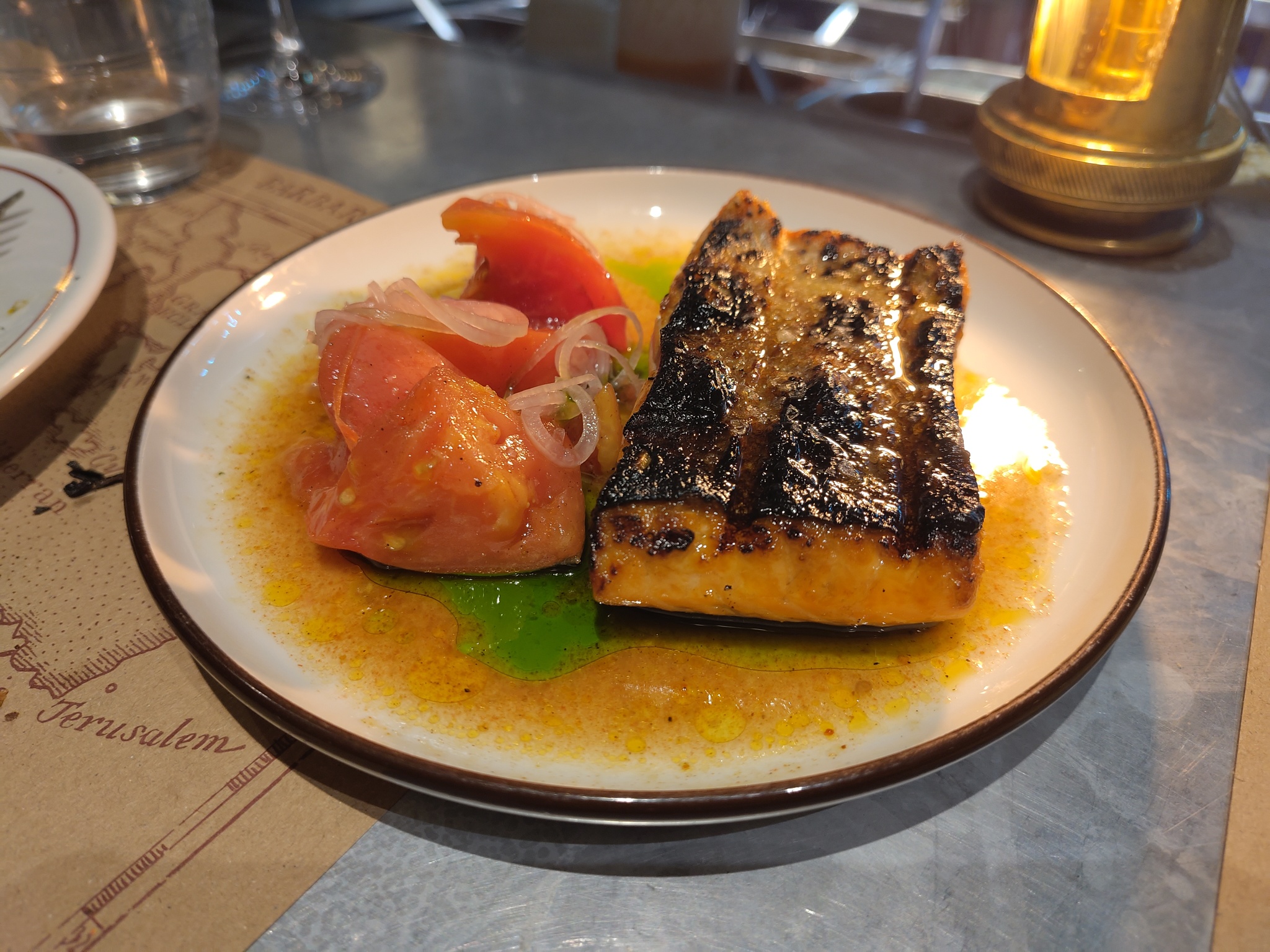
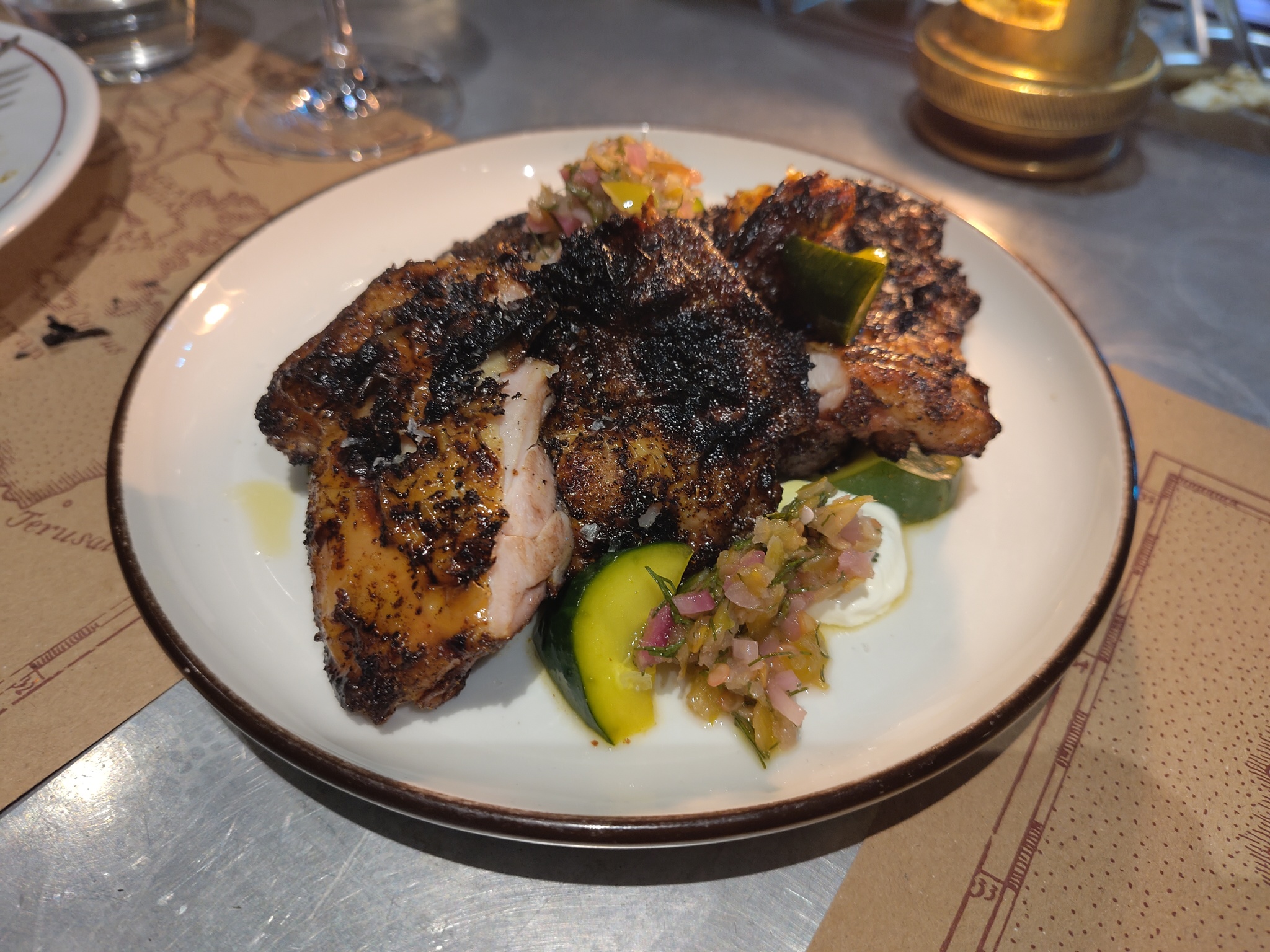
For our mains, we shared a mushroom kebab, coffee rubbed chicken, and a poached and grilled trout. The Mushroom kebab was underwhelming, and the portion size was small. The trout was still very moist, and the crisply skin added flavour; some pickled meaty tomatoes and onion slices accompanied it. Our favourite was the coffee rub chicken. Moist, juicy, and with a proper splash of heat from the topping and tasty pickled courgette.
We enjoyed the atmosphere was good, even though it was fairly noisy. But it wasn't so bad so we could not near each other. The flames from the grill made it on the warmer side — we were seated less than 3 metres from it. The extraction was excellent and hence it wasn't smokey — not even when one of the chefs refilled the fuel.
The downside of the Barbary were the cramped seating arrangements with fixed backless bar stools by the counter. Long legs made it necessary to man-spread, which isn't great for the unknown customers sitting next to you having to do the same. The restaurant is also not accessible, but this is made clear on their website when you use their booking tool. There is a terrace across/around the corner which would be better for seating, but it was too cold for that to be pleasant.
Shortlink
This article has a short URL available: https://drck.me/barbary-kdr


Life Line
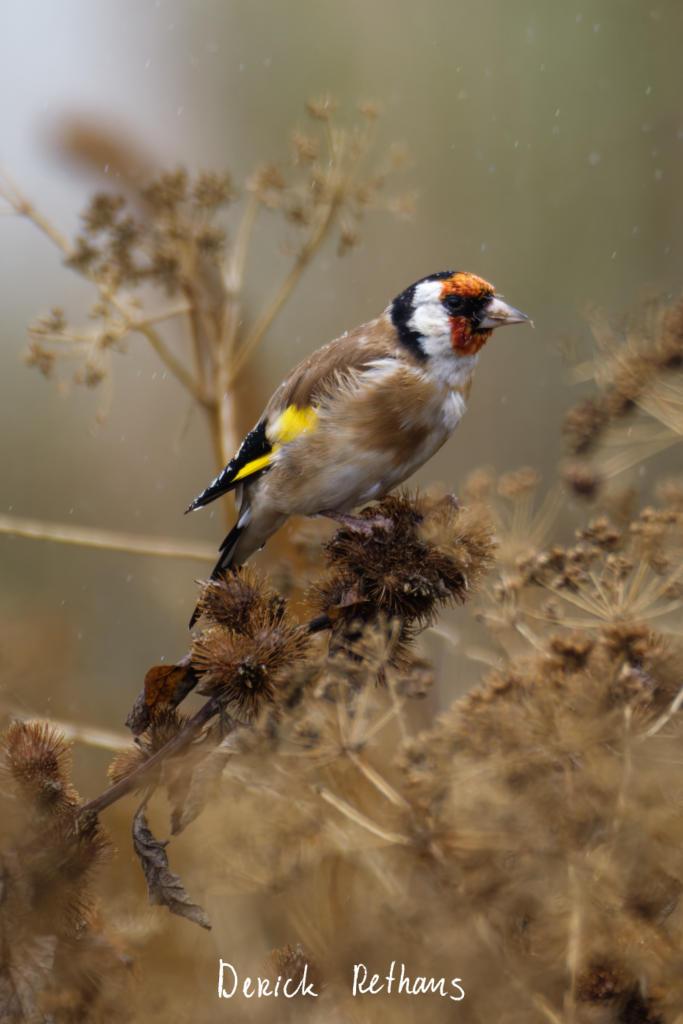
Goldfinch On The Seedheads
We spotted this lovely bird returning form RSPB Snettisham. It was happily feeding on the seeds in the drizzle.
#photography #Birds #BirdPhotography #BirdsOfFediverse #NaturePhotography #wildlife #Norfolk #RSPB
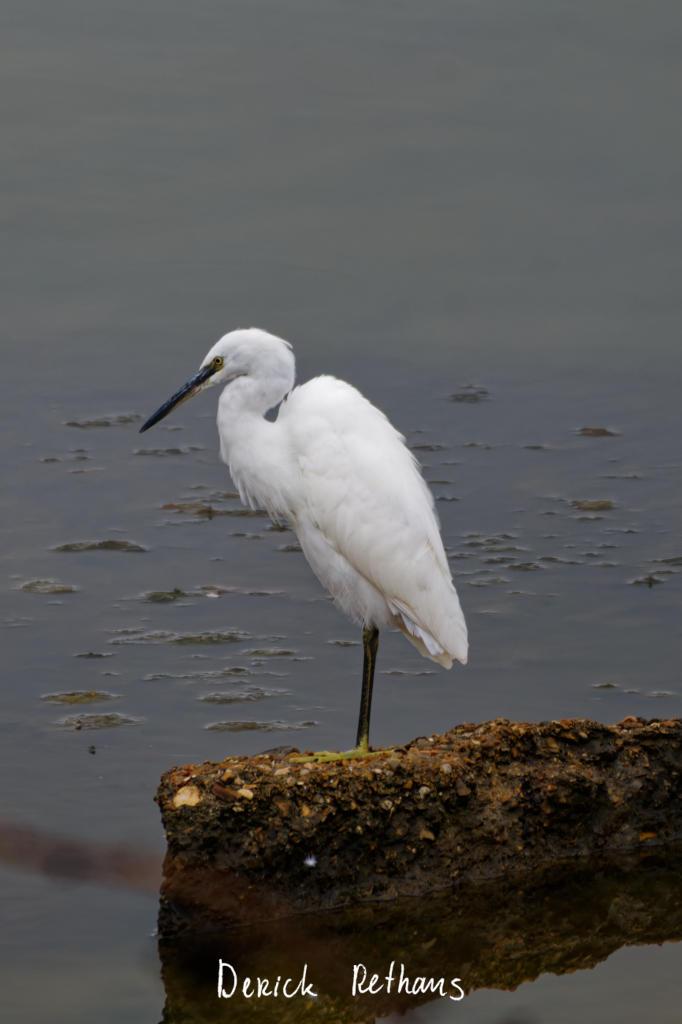
Little Egret Looking for Fish
In the lagoon at RSPB Snettisham, this Little Egret is keen on catching breakfast.
(after last week's #php and #php2shell hoohaa, this daily bird photo will be continuing)
#photography #Birds #BirdPhotography #BirdsOfFediverse #NaturePhotography #wildlife #Norfolk #RSPB
It's been an interesting day.
Besides fixing up PECL, I have mostly dealt with journalists.
Half an hour phone chat with the Dutch NOS nieuws, and a 4 minute item for tonight's NOS Journaal (in 5 minutes).
And then a live interview for the international feed of BBC News.
Can I go back to bird watching?
Specify whether traffic signals have tactile indications that it's safe to cross
Determine roads lane count
Specify motorcycle parking capacities
Specify motorcycle parkings covers
Specify parking access
Specify road surfaces
Specify whether roads have lane markings
Survey postbox collection times
Specify street/place names to addresses
Survey opening hours
Survey hairdresser's customers
Survey if places still exist
Specify cycleways width
Specify width of opening
Specify whether there are cycleways
Created a main entrance and a home entrance
Okay, I think I fixed the PECL load situation.
Everything is now cached.
It means nobody can upload any new versions as you can't log in, but at least the server is not dying now.
It is deprecated, so this temporary measure is good enough for now.
I walked 2.8km in 18m39s
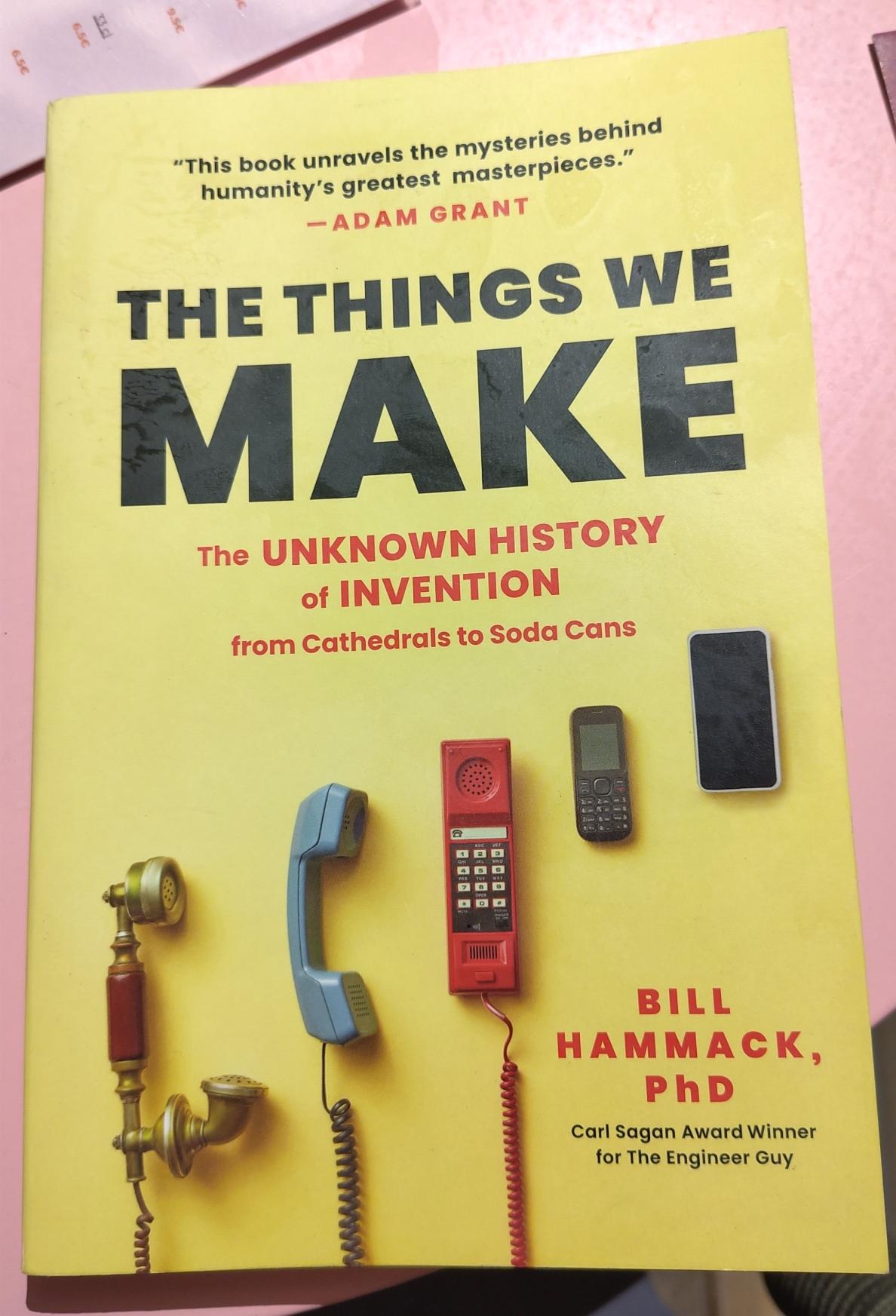
I've just finished reading The Things We Make by Bill Hammack.
A curious introduction into the world of the engineering method. How it's different from pure science and with the end product of serving mankind in mind.
Updated a restaurant
Updated 2 restaurants; Confirmed a bakery shop

Shortlink
This article has a short URL available: https://drck.me/marjories-keb