
Unicode Collation Sorting
I recently added support to this website to receive Favourites and Replies through the ActivityPub posts that I create from each article.
Replies show up as comments after moderation, and favourites show up as Likes under each of the articles.
When fetching all the likes, my internal API returns the following structure — just like how PDOStatement::fetchAll() returns them:
array(7) {
  [0]=>
  array(8) {
    ["name"]=>
    string(14) "Marcus Bointon"
    ["linked_account"]=>
    string(33) "https://phpc.social/users/Synchro"
  }
  [1]=>
  array(8) {
    ["name"]=>
    string(14) "Derick Rethans"
    ["linked_account"]=>
    string(33) "https://phpc.social/users/derickr"
  }
  [2]=>
  array(8) {
    ["name"]=>
    string(26) "🇵🇸 Álvaro González"
    ["linked_account"]=>
    string(37) "https://mastodon.social/users/kAlvaro"
  }
}
I wanted to sort the likes by name, which turned out harder to be than I had hoped. Mostly because people do odd things with their names sometimes, such as not using an upper-case letter, or by prefixing their names with emojis as you can see in the example above.
If each entry in my array was only a string with a name, and no emoji is prefixed, you can use natcasesort(), but I have both complex objects and an emoji. This means PHP's built-in functions don't cut it.
However, PHP also has the Intl extension, which has a Collator class with a sort method.
To create such a collator in code, use:
$collator = new Collator('root');
The Root Collation is ICU's Default Collation, but as the ICU documentation says:
Not all languages have sorting sequences that correspond with the root collation order because no single sort order can simultaneously encompass the specifics of all the languages. In particular, languages that share a script may sort the same letters differently.
This is good enough for my use case there, where I only want to sort names in a reasonable fashion.
One thing that it does do is to sort lower-case letters before upper-case letters, but this behaviour can be changed by setting CASE_FIRST attribute on the collator to UPPER_FIRST:
$collator->setAttribute(Collator::CASE_FIRST, Collator::UPPER_FIRST);
Letters in non-Latin script will sort after the Latin letters.
However, the Collator->sort() method can only handle arrays of strings, and not complex objects.
To get around this limitation we instead use PHP's built-in usort() function with our own callback. In our callback we can use the Collator::getSortKey() method on each sort element's name array key to create the key that Collator::sort() would have used internally.
For good measure, we also use trim to remove preceding and trailing whitespace. The code to sort the elements now looks like:
$col = new Collator('root');
$col->setAttribute(Collator::CASE_FIRST, Collator::UPPER_FIRST);

usort(
    $allLikes,
    function($a, $b) use ($col) {
        $aName = trim($a['name']);
        $bName = trim($b['name']);
        $aKey = $col->getSortKey($aName);
        $bKey = $col->getSortKey($bName);

        return $aKey <=> $bKey;
    }
);
Now the only problem is that emojis sort before actual letters, so we need to scrub them. Each letter defined in the Unicode standard has properties associated with it. One of those properties is the General Category. If you examine the chart you will fined that for 0061;LATIN SMALL LETTER A the GC is Ll (Letter, Lower-case). The flag emoji from my example is composed of two characters: 1F1F5;REGIONAL INDICATOR SYMBOL LETTER P and 1F1F8;REGIONAL INDICATOR
SYMBOL LETTER S. Both of these have as category So (Symbol, Other).
The PCRE library that PHP uses for regular expressions is aware of these categories, and you can select for for them with the \p{…} specifier. The documentation has a page on it.
In our case we want to remove all Symbols (with category S). Changing our trim lines to strip this character class accomplishes this.
When we now combine all of this, we get:
<?php
$allLikes = [
    [ 'name' => 'Marcus Bointon', 'linked_account' => 'https://phpc.social/users/Synchro' ],
    [ 'name' => 'Derick Rethans', 'linked_account' => 'https://phpc.social/users/derickr' ],
    [ 'name' => '🇵🇸 Álvaro González', 'linked_account' => 'https://mastodon.social/users/kAlvaro' ],
];

$col = new Collator('root');
$col->setAttribute(Collator::CASE_FIRST, Collator::UPPER_FIRST);

usort(
    $allLikes,
    function($a, $b) use ($col) {
        $aName = trim(preg_replace('/\p{S}+/u', '', $a['name']));
        $bName = trim(preg_replace('/\p{S}+/u', '', $b['name']));
        $aKey = $col->getSortKey($aName);
        $bKey = $col->getSortKey($bName);

        return $aKey <=> $bKey;
    }
);

var_dump($allLikes);
?>
When we now run the example with the $allLikes array from previously, our result is:
array(3) {
  [0] =>
  array(2) {
    'name' =>
    string(26) "🇵🇸 Álvaro González"
    'linked_account' =>
    string(37) "https://mastodon.social/users/kAlvaro"
  }
  [1] =>
  array(2) {
    'name' =>
    string(14) "Derick Rethans"
    'linked_account' =>
    string(33) "https://phpc.social/users/derickr"
  }
  [2] =>
  array(2) {
    'name' =>
    string(14) "Marcus Bointon"
    'linked_account' =>
    string(33) "https://phpc.social/users/Synchro"
  }
}
And from that, I can then generate the HTML code to render who liked my article, which you can hopefully see below.

Comments
@blog I've created https://senseexception.github.io/intl-sort/ for such sorting cases.


Life Line
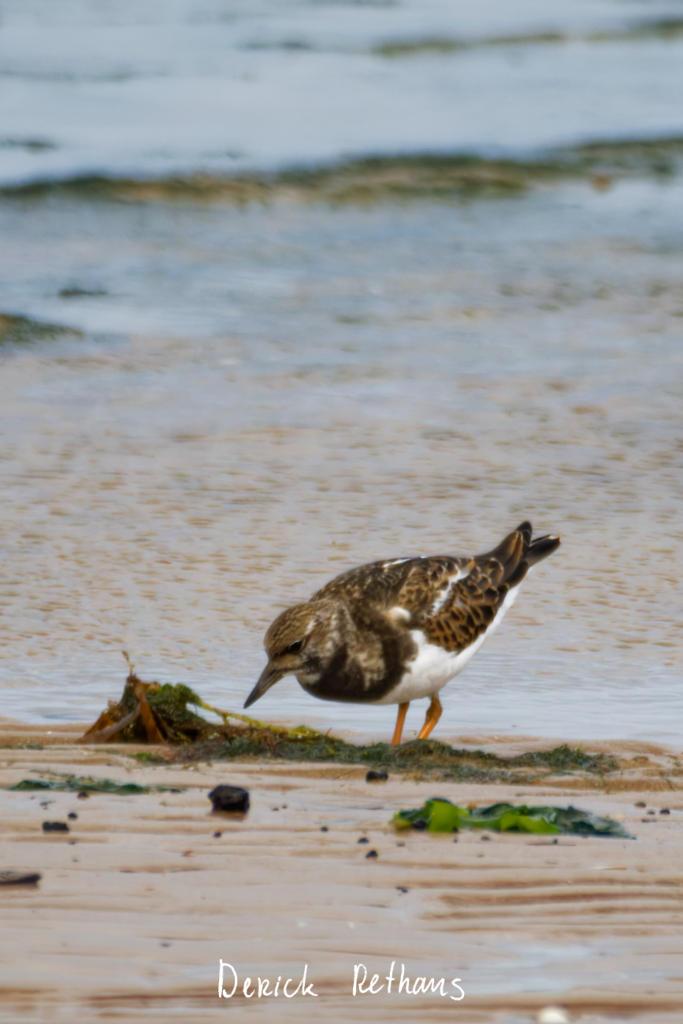
A Ruddy Turnstone Turning Over Stones On The Beach
A bunch of them were turning over things on Hunstanton Beach to see if there were any grubs to eat.
#photography #Birds #BirdPhotography #BirdsOfFediverse #NaturePhotography #wildlife #Norfolk
I've just donated blood again, for the first time in a while (for reasons). Now for the best thing, the free snacks!
Updated a restaurant and a pharmacy
Updated a fast_food
Created a defibrillator
Flock of Spoonbills
About 20 of them were flying over, but these made a nice pattern.
#photography #Birds #BirdPhotography #BirdsOfFediverse #NaturePhotography #wildlife #Norfolk

Survey wheelchair accessibility of public transport platforms
Specify street/place names to addresses
Survey housenumbers
Determine the heights of kerbs at crossings
Survey postbox collection times
Specify whether roads have sidewalks
Specify whether roads have lane markings
Specify whether there are cycleways
Specify whether crosswalks have tactile paving
Specify whether pedestrian crossings have markings
Survey opening hours
Specify board types
Specify cycle barrier installation
Specify cycle barrier types
Specify drinking water types
Determine whether any glass or just glass bottles can be recycled here
Specify width of opening
Specify road surfaces
Specify features of bicycle repair stations
Shortlink
This article has a short URL available: https://drck.me/intl-sort-je4