
Xdebug 2.3: Enhanced xdebug_debug_zval()
This is the second article in a series about new features in Xdebug 2.3, which was first released on February 22nd.
xdebug_debug_zval() has been around for quite some time, to provide correct information about how PHP internally stores a variable. Unlike PHP's built in debug_zval_dump() function, it does not modify the variable information that it tries to show. This is because instead of passing in a variable, you pass in its name. Passing a variable into a function, can modify the various parameters that are associated with this variable, such as the is_ref and refcount fields.
xdebug_debug_zval() does not suffer from these inadvertent modifications, as you pass in the variable's name, and the function looks up the information about a variable in the symbol tables itself.
The difference becomes clear with the following two examples. With debug_zval_dump():
<?php
$a = array(1, 2, 3);
$b =& $a;
$c =& $a[2];

debug_zval_dump($a);
?>
Which outputs (after a little formatting):
array(3) refcount(1){
        [0]=> long(1) refcount(2)
        [1]=> long(2) refcount(2)
        [2]=> &long(3) refcount(3)
}
And with xdebug_debug_zval():
<?php
$a = array(1, 2, 3);
$b =& $a;
$c =& $a[2];

xdebug_debug_zval('a');
?>
Which outputs (after a little formatting):
a: (refcount=2, is_ref=1)=array (
        0 => (refcount=1, is_ref=0)=1,
        1 => (refcount=1, is_ref=0)=2,
        2 => (refcount=2, is_ref=1)=3
)
In the debug_zval_dump() example, the refcounts for the array elements are all one too high, and the refcount for the array itself is one too low. The array is also not marked as reference.
However, before Xdebug 2.3, the xdebug_debug_zval() function would only accept a variable name, but not any array subscripts or property deferences. Meaning that you couldn't really dump a sub array. Xdebug 2.3 adds support for dereferencing properties and array elements by reusing the variable name parser of the remote debugging. Hence, you can now do the following:
<?php
$a = array(1, 2, 3);
$b =& $a;
$c =& $a[2];

xdebug_debug_zval('a[2]');
?>
Which outputs:
a[2]: (refcount=2, is_ref=1)=3
Or:
<?php
$a = new StdClass;
$a->prop = [3.14, 2.72];

xdebug_debug_zval('a->prop');
xdebug_debug_zval('a->prop[1]');
?>
Which outputs:
a->prop: (refcount=1, is_ref=0)=array (
        0 => (refcount=1, is_ref=0)=3.14,
        1 => (refcount=1, is_ref=0)=2.72
)
a->prop[1]: (refcount=1, is_ref=0)=2.72
Other parts in this series:


Life Line
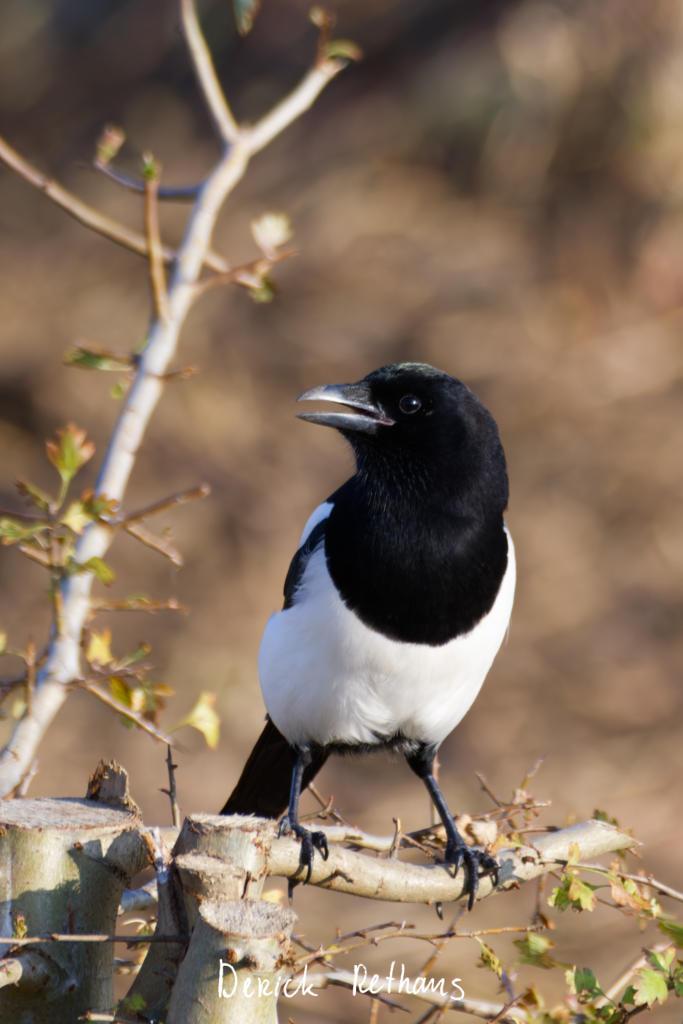
Magpie About to Do What Magpies Do
While observing cormorants stretching out, I noticed this cheeky birb on a branch admiring the same stretching out.
#photography #Birds #BirdPhotography #BirdsOfFediverse #NaturePhotography #wildlife #wwt #london
Specify whether kerbs have tactile paving
Determine the heights of kerbs
Survey hairdresser's customers
Specify bridge structures
Specify maximum allowed weights
Specify whether there are cycleways
Specify cycleways width
Specify whether public transport stops have benches
Specify whether public transport stops have shelters
Specify step counts
Survey tactile paving on steps
Specify path surfaces
Specify bicycle parking types
Specify bicycle parkings covers
Specify camera types
Survey if places still exist
Add whether public transport stops are lit
Determine place names
Survey opening hours
Survey housenumbers
Specify power poles material type
Determine information board names
Specify board types
Specify whether traffic signals have sound signals
Shortlink
This article has a short URL available: https://drck.me/debugzval23-bni