
Collecting Garbage: PHP's take on variables
This is the first part of three-parts column that was originally published in the April 2009 issues of php|architect.
In this three part column I will explain the merits of the new Garbage Collection (also known as GC) mechanism that is part of PHP 5.3. Before we start with the intricate details of PHP's new GC engine I will explain why it is actually needed. This, combined with an introduction how PHP deals with variables in general is explained in this first part of the column. The second part will cover the solution and some notes on the GC mechanism itself, and the third part covers some implications of the GC mechanism, as well as some benchmarks. But now first on to the introduction.
PHP stores variables in containers called a "zval". A zval container contains besides the variable's type and value, also two additional bits of information. The first one is called "is_ref" and contains a boolean value whether this variable is part of a "reference set". With this bit PHP's engine knows how to differentiate between normal variables, and references. However, PHP has user-land references—as created by the & operator, but also an internal reference counting mechanism to optimize memory usage. The second piece of additional information, called "refcount", contains how many variables names—also called symbols—point to this one zval container. All symbols are stored in a symbol table, of which there is one per scope. There is a scope for the main script (ie, the one requested through the browser), as well as for every function or method.
A zval container is created when a new variable is created with a constant value, such as:
$a = "new string";
In this case the new symbol name "a" is created in the current scope, and a new variable container is created with type "string", value "new string". The "is_ref" bit is by default set to "false" because no user-land reference has been created. The "refcount" is set to "1" as there is only one symbol that makes use if this variable container. Also, if the "refcount" is "1", "is_ref" is always "false". If you have Xdebug installed you can display this information by calling:
xdebug_debug_zval('a');
which displays:
a: (refcount=1, is_ref=0)='new string'
Assigning this variable to another variable name, increases the refcount:
$a = "new string";
$b = $a;
xdebug_debug_zval( 'a' );
which displays:
a: (refcount=2, is_ref=0)='new string'
The refcount is "2" here, because the same variable container is linked with both "a" and "b". PHP is smart enough not to copy the actual variable container when it is not necessary. Variable containers get destroyed when the "refcount" reaches zero. The "refcount" gets decreased by one for each symbol linked to the variable container leaves the scope (f.e. if the function ends) or when unset() is called on a symbol. The following example shows that:
$a = "new string";
$c = $b = $a;
xdebug_debug_zval( 'a' );
unset( $b, $c );
xdebug_debug_zval( 'a' );
which displays:
a: (refcount=3, is_ref=0)='new string'
a: (refcount=1, is_ref=0)='new string'
If we now call "unset( $a );" the variable container, including the type and value will be removed from memory.
Things get a tad more complex with compound types such as arrays and objects. Instead of a scalar value, arrays and objects store their properties in a symbol table of their own. This means that the following example creates three zval containers:
$a = array( 'meaning' => 'life', 'number' => 42 );
xdebug_debug_zval( 'a' );
which displays (after formatting):
a: (refcount=1, is_ref=0)=array (
        'meaning' => (refcount=1, is_ref=0)='life',
        'number' => (refcount=1, is_ref=0)=42
)
Graphically, it looks like:

You can see the three zval containers here: "a", "meaning" and "number". Similar rules apply for increasing and decreasing "refcounts". Below we add another element to the array, and set it's value to the contains of an already existing element:
$a = array( 'meaning' => 'life', 'number' => 42 );
$a['life'] = $a['meaning'];
xdebug_debug_zval( 'a' );
which displays (after formatting):
a: (refcount=1, is_ref=0)=array (
        'meaning' => (refcount=2, is_ref=0)='life',
        'number' => (refcount=1, is_ref=0)=42,
        'life' => (refcount=2, is_ref=0)='life'
)
Graphically, it looks like:

From the above Xdebug output,we see that both the old and new array elements now point to a zval container whose "refcount" is "2". Although Xdebug's output shows two zval containers with value "life", they are the same one. The function xdebug_debug_zval() function does not show this, but you could see it by also displaying the memory pointer.
Removing an element from the array is like removing a symbol from a scope. By doing so, the "refcount" of a container that an array element points to is decreased. Again when the "refcount" reaches zero, the variable container is removed from memory. Again an example to show this:
$a = array( 'meaning' => 'life', 'number' => 42 );
$a['life'] = $a['meaning'];
unset( $a['meaning'], $a['number'] );
xdebug_debug_zval( 'a' );
which displays (after formatting):
a: (refcount=1, is_ref=0)=array (
        'life' => (refcount=1, is_ref=0)='life'
)
Now, things get interesting if we add the array itself as an element of the array, which we do in the next example—in which I also sneaked in an reference operator as otherwise PHP would create a copy here:
$a = array( 'one' );
$a[] =& $a;
xdebug_debug_zval( 'a' );
which displays (after formatting):
a: (refcount=2, is_ref=1)=array (
        0 => (refcount=1, is_ref=0)='one',
        1 => (refcount=2, is_ref=1)=...
)
Graphically, it looks like:

You can see that the array variable ("a") as well as the second element ("1") now point to a variable container that has a "refcount" of "2". The "..." in the display above shows that there is recursion involved, which of course in this case it means that the "..." points back to the original array.
Just like before, unsetting a variable removes the symbol, and the reference count of the variable container it points to is decreased by one. So if we unset variable $a after running the above code, the reference count of the variable container that $a and element "1" point to gets decreased by one, from "2" to "1". This can be represented like:
(refcount=1, is_ref=1)=array (
        0 => (refcount=1, is_ref=0)='one',
        1 => (refcount=1, is_ref=1)=...
)
Graphically, it looks like:

Although there is no symbol in any scope pointing to this structure anymore, it can not be cleaned up either because the array element "1" still points to this same array. Because there is no external symbol pointing to it, there is no way for a user to clean up this structure anymore, and thus you get a memory leak. Fortunately, PHP will clean up this data structure at the end of the request, but before then this is taking up valuable space in memory. The mentioned situation happens often if you're implementing parsing algorithms or other things where you have a child point back at a "parent" element. The same situation can also happen with objects of course, where it actually happens easier as objects are always implicitly used by reference.
This might not be a problem if this only happens once or twice, but if there is thousands, or even millions of these memory losses, this obviously starts being a problem. Especially in long running scripts, such as daemons where the request basically never ends, or in large sets of unit tests. The latter caused problems for us while running the unit tests for the Template component of the eZ Components library. In some cases it would require over 2 GiB of memory, which our test server didn't quite have.
With that we conclude this introduction, for more information on how PHP deals with variables I can point you at June 2005 issue of php|architect. That article is also available on-line as PDF (http://derickrethans.nl/files/phparch-php-variables-article.pdf). In the next installment, we're going to discuss the solution to the memory leak problem with circular references.

Comments
cool! very thanks
Thanks for the insight into PHP memory.
It's something I've never taken into consideration (although, I've always known I should have ;)
I look forward to the other two posts.
Cheers
I wonder, where do You get this knowledge from? Anyhow, great pice of information, thank You.
Nice post.
awesome post!
sign me up for more : )
Seriously ..... have not seen nice articles like that about php for a long time. Very good.
ps. i think it should be possible to create force_garbage_collecton_flush_now() or something so php script could call it and it would go through all objects counting loops in objects graph to get rid of the islands you mentioned. It would probably take a bit of time but at the end its better than running on 2GB of ram to run some unit tests ;D is it something that would be possible in PHP ?
thanks again for a nice read
art
Awesome post!
Is PHP 5.2 same way as described as this post?
@art: You can force the GC, it's explained in the next post :-)
@Morgan: Yes, what's written in this post also applies to PHP 5.0->5.2


Life Line
Saw a rare Glossy Ibis yesterday at Rainham Marshes.
Not great photos, but you can't have it all.
#photography #Birds #BirdPhotography #BirdsOfFediverse #NaturePhotography #wildlife #RSPB

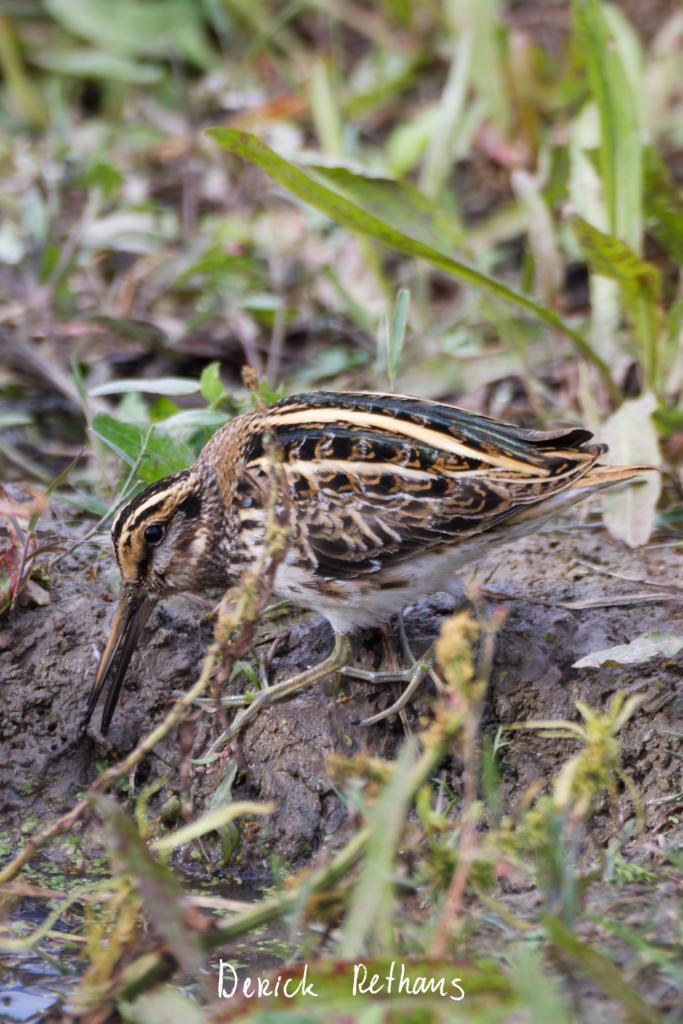
A Jack Snipe Close Up
I had a lovely day out at the Rainham Marshes yesterday. One hide I stumbled into was full of excitement, and it turned out this Jack Snipe was bobbing up and down right under the hide while foraging.
After a while, a crow spoiled the view and chased it off.
#photography #Birds #BirdPhotography #BirdsOfFediverse #NaturePhotography #wildlife #RSPB
Specify whether pedestrian crossings have traffic signals
Specify bicycle parking types
Specify bicycle parkings covers
Specify type of entrances
Specify street/place names to addresses
Specify whether roads have lane markings
Specify whether there are cycleways
Specify whether roads have sidewalks
Determine the heights of kerbs at crossings
Specify whether crosswalks have tactile paving
Specify whether pedestrian crossings have islands
Specify access to places
Specify what can be recycled in recycling containers
Specify road surfaces
Specify whether pitches are lit
Specify width of opening
Survey if places still exist
Survey whether benches have backrests
Specify path surfaces
Specify whether traffic signals have sound signals
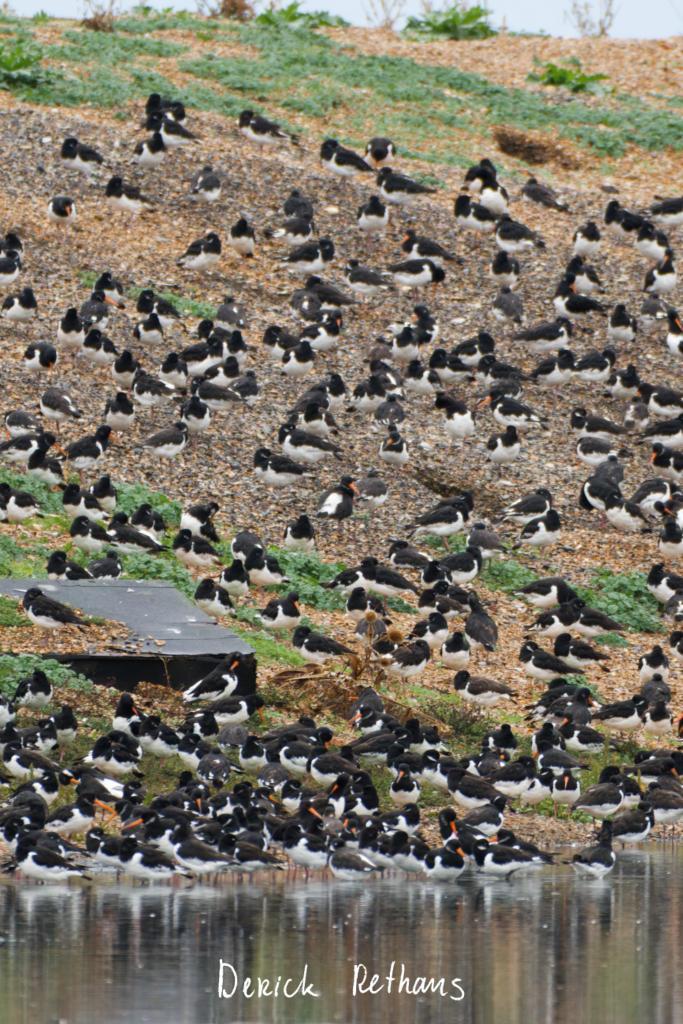
A Small Selection of the Oystercatchers at Snettisham
About a few hundred Oystercatchers are sitting, sleeping, and walking around on a bank. Some are foraging at the shore.
#photography #Birds #BirdPhotography #BirdsOfFediverse #NaturePhotography #wildlife #Norfolk #RSPB
I hiked 8.6km in 5h39m13s
Brown Hare
Altough we were looking for birds, we couldn't not observe this lovely hare munching away in the grass. It had clearly seen us, but didn't seem to be bothered.
#photography #NaturePhotography #wildlife #Norfolk

Shortlink
This article has a short URL available: https://drck.me/cgptov-7zk